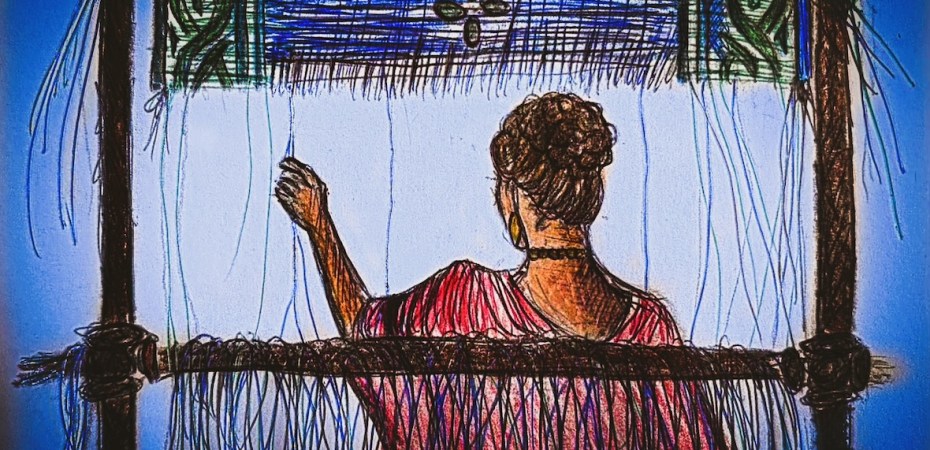
Lianne Ponferrada examines the portrayal and role of women in Christopher Nolan’s adaptation of Homer’s, The Odyssey.
In interviews, Nolan often referred to Emily Wilson’s translation, one that allowed their colourful personalities to breathe, unscathed by misogynistic biases held by previous translators. Despite this – and some brilliant actresses at hand – Nolan fulfilled all expectations, simplifying Homer’s most beloved women to death.
In one, Circe advocates for the female victims of war:
‘Base. Disgusting, primal urges you value in battle… they’ve raped and pillaged across the world for you – you think that’s against their nature? You think they only did those things because you ordered them to? A true commander thinks his men’s savagery is actually discipline. You don’t seem that deluded. But you sent them to me, here, on my own. A gang of filthy soldiers with empty bellies and hot blood. You thought they’d respect me and my home? Look at them. Know your own men.‘
Though this was a compelling performance from Morton, and not untrue by any means. Why would an immortal witch, who is incredibly far removed from human affairs, suddenly speak for the female victims of a war that she’s never been involved with? It’s clear that Nolan hardly spent much time contemplating nor refining his female characters, treating them as messenger pigeons and/or literary symbols. Whereas, in Homer’s original text, Circe is more than a mere hindrance to Odysseus’ nostos (or, homecoming). She’s indifferent towards Odysseus. All he is to her is a sexy mortal “boytoy” – as cleverly asserted by my A-Level Classical Civilisations teacher:
‘Now sheathe your sword and come to bed with me. Through making love / we may begin to trust each other more.’ ’ (ll. X. 334-5)
Then, Nolan’s Circe advises Odysseus and his men to speak to Tiresias. This is consistent with the text, but makes little sense after Circe’s impassioned speech against their behaviour, which makes this narrative decision even more nonsensical.
By portraying her in such a way, Nolan limits the variety in personality that Homer showcases. Women in Nolan’s Odyssey are merely emotional beings. I
And if he wanted a compelling feminist speech, why didn’t he just keep Calypso’s?
You cruel, jealous gods! You bear a grudge / whenever any goddess takes a man / to sleep with as a lover in her bed. / … / So now, you male gods are upset with me / for living with a man. A man I saved! (ll. V.118-20, 29-30)
Calypso rails against the double standard held by Zeus. Excellent points aside, what I find compelling is her passion. Yet, in Nolan’s interpretation she is deprived of desire, personality, speech, and colour. All she offers to the narrative is a segway into Odysseus telling his story.
[CALYPSO] Tell me what you do remember. The rest will come…
Now, we cannot have a discussion about the Odyssey without writing about Penelope. Where is her wit? Whilst Nolan kept the weaving trick and included an evocative scene where Penelope lectures Telemachus on the reality of being a woman, he removed the episode that allowed her to intellectually supersede Odysseus.
In Book 23, Odysseus is quickly undone by Penelope’s intelligence:
[PENELOPE] “Now, Eurycleia, make the bed for him outside the room he built himself. Pull out / the bedstead, and, spread quilts and blankets on it.”
[ODYSSEUS] “Woman! Your words have cut my heart! Who moved / my bed? … No man, however young and strong, / could pry it out.” (ll. XXIII. 178-80, 183-4, 186-7)
She tests, nearly teases, Odysseus by suggesting her aged maid move their bed. But, it simply can’t be done.
When the two witticists wedded, Odysseus built a bed into an olive tree, where its roots symbolised the depth of their love. How cute is that? Penelope is quick on her feet throughout the entire exchange, but it is here that Odysseus is undone. He fails to recognise her teasing, and it is Penelope who triumphs.
Instead, Nolan excludes this build-up (or, foreplay, if you will) and Penelope and Odysseus have a visually boring conversation amongst the suitors’ corpses.
Senior lecturer in Classics at Bristol University, Dr Francis Pickworth, advised viewers to question what Nolan’s choices say about our current society. And, I feel as if Nolan’s translation of the Odyssey is a reflection of society’s continual shift towards conservatism. This is hardly a new phenomenon as, historically, classical narratives were adopted or misconstrued by uber-conservative factions to maintain the field’s exclusive reputation or justify major political, cultural, and social misdemeanors.
Instances include Muthel’s production of Aeschylus’ Oresteia, which was sponsored by the Nazi government, a fascist Italy parading around Virgil’s Aeneid, and Stoicism becoming a poor excuse for toxic masculinity. And as recently as January 2021, American Republicans would raid the Capitol carrying signs appealing to classical imagery.
I’m certain that Nolan didn’t mean for his Odyssey interpretation to come off this way.
Why does this matter then? Well, when I reminisce about my introduction to the classical world, only warm memories come to mind. But, I fear that with so many discovering the classics through Nolan’s (mis)interpretation of the Odyssey, their introduction to the classics perhaps pushes women – particularly women of colour and queer individuals – away from the classics.
In an interview, Lupita Nyong’o claimed that Homer spent little time with the Odyssey’s women. Though she makes this point without any malice whatsoever, she unknowingly represents classics as a limited field: she unweaves the tapestry that classicists have slaved over that depicts women as a monumental part of Ancient Greek poetry.
There is no clear resolution to the matter at hand. Unless I could embark on an odyssey myself, time travelling and teleporting to loom behind Christopher Nolan’s shoulder whilst he wrote.
I suppose honing our media literacy skills and consulting primary sources – so we can critically consume classical portrayals – would be an ideal start. (I’d highly recommend starting with Emily Wilson’s translation of the Odyssey).
My cinematic excursion left me thinking two things. Firstly, ear plugs are a must-need for watching movies in theatres. Secondly, and most significantly, the importance of consuming media critically. It is, in fact, always ‘that deep.’
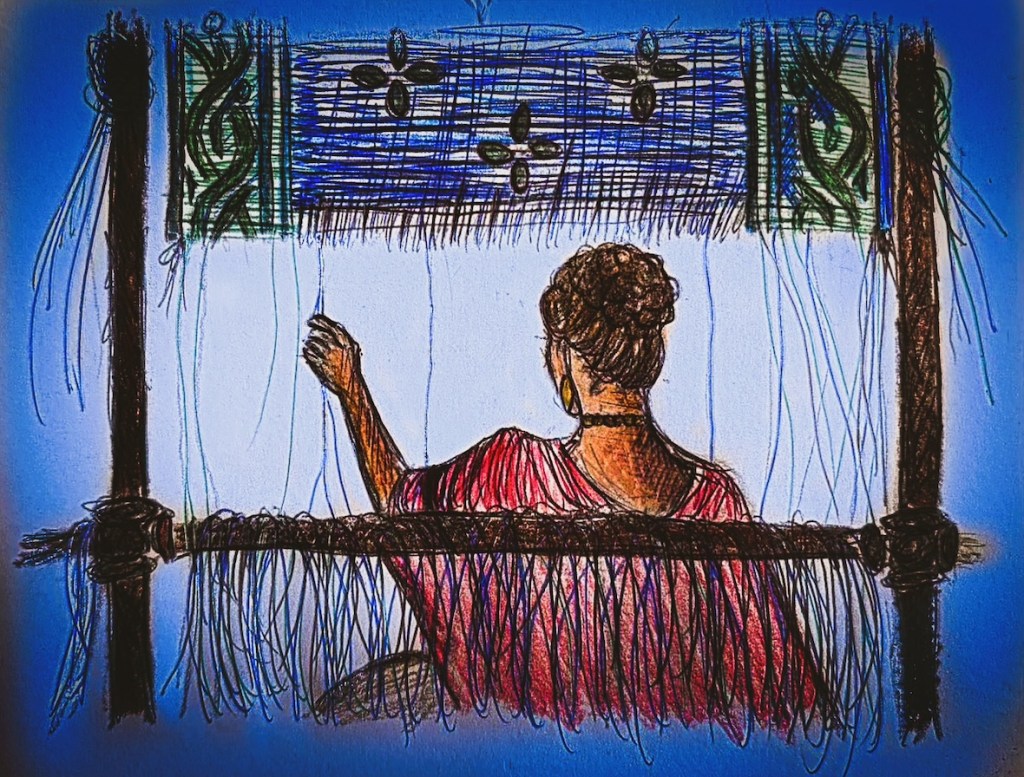
Artwork by Betty Goffery

