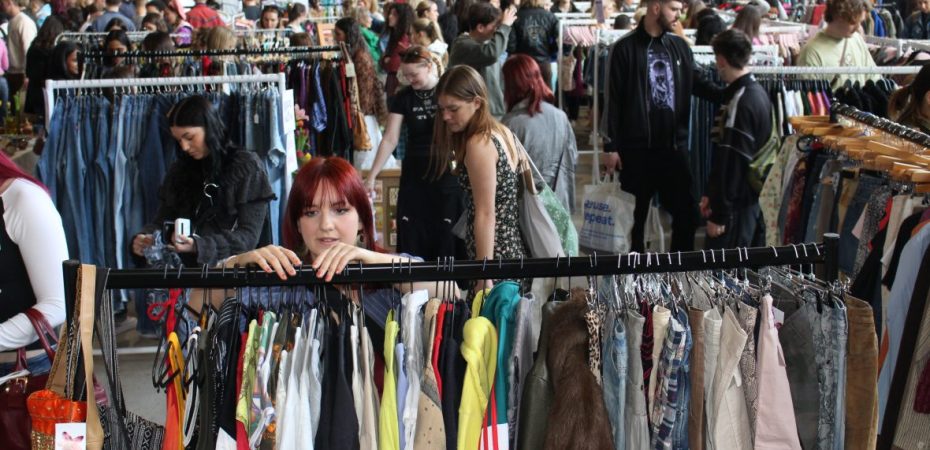
Rae Tugwell in conversation with the CEO and founder of Clothes Cycle, Poppy Collingwood-Cameron, on the role of physical space, second-hand culture, and female solidarity in reshaping modern fashion.
The world of fashion has long been constrained by external pressures: the male gaze and social media perceptions demand the restriction of female autonomy and pit our individuality against one another. For decades, fashion has operated as a dual instrument of control: on one hand, a commercialised machine running on the restrictions of a male-dominated society; on the other, an anonymising, digitalised machine that blurs realities behind a smartphone screen. In this shift toward digital consumption, we often overlook the significance of physical space: the role of community is replaced with efforts to further fragment female voices and solidarity.
Enter Clothes Cycle.
What began as a childhood obsession with second-hand clothing apps like Depop has transformed into the UK’s largest travelling thrift market. Spanning an ambitious Autumn/Winter tour across Liverpool, Bristol, Edinburgh and Manchester, Clothes Cycle cannot be perceived as merely an alternative to high street shopping – it is an act of reclaiming spatial authority. Bringing together over 100 sellers, clothes swaps, beauty treatments, street food, music, free alterations and local tattoo artists, the festival offers a radical counter-message: fashion is no longer a tool for isolation, but an engine for female autonomy and community.
Clothes Cycle’s CEO and founder, Poppy Collingwood-Cameron, is undoubtedly one of the most influential and resilient women I have had the pleasure of conversing with. A self-described ‘hustler’ at age 12, she had begun to construct the skeleton of her business after acknowledging flaws in existing second-hand systems.
‘I had the vision of Clothes Cycle since I was literally about 12 years old,’ the founder recalls. ‘When I was a massive ‘Depoper’ back in the day and was obsessed with second-hand clothing and charity shops and selling stuff online… it used to really frustrate me that there was nowhere I could go and shop everything second-hand and kind of enjoy the clothes I liked, because at the time it wasn’t really trendy or popular at all.’
The internet laid down the initial framework, but its flaws soon overshadowed its convenience: scams, digital isolation, and poor quality control.
‘There were so many issues with Depop. Like you’d get scammed all the time, things will come with holes in it, it comes smelly, all of this.’
Following a cultural shift towards second-hand shopping – accelerated by COVID-19 lockdowns – Poppy recognised a surging demand for individuality. Yet, despite this appetite, screen-fatigued consumers lacked a physical space to exercise this passion. Rather than waiting for permission or large-scale capital, Clothes Cycle took to the streets in an act of pure bootstrapping.
The initial trial run was deliberately small: 20 sellers packed into a hall beneath the Victorian Methodist Church on Whiteladies Road. When those first dates were received with nothing but praise and success, the ambition scaled overnight. Clothes Cycle travelled straight to Manchester – in a venue they still inhabit now – this time with 70 sellers and pure momentum.
‘I went and stayed with my friend in Manchester for two weeks before, and we printed off flyers with her uni printers, handed them out by hand to everybody, and messaged everyone to come. It was very boots-on-the-ground.’
Claiming the Boardroom: The Politics of Female Authority
Entering the business sphere as a young woman, liaising with venues, legal teams and managing large-scale operations as an all-female team quickly exposed the ingrained misogyny of the corporate world.
‘Our whole team is women, and we often get asked for the manager, or are told ‘we’re not going to listen to that person, not realising that we are the bosses.’
The team is regularly confronted by prejudiced assumptions when negotiating contracts and venue terms.
‘We also get pushed around a lot in contracts. People try and really take us for a ride. So we’ve learnt quick and fast on that front.’
Refusing to bend to these biases, the response was clear: assert the facts and refuse to back down.
‘I actually took someone to small claims court, and I won. I was being told that I just didn’t know what I was talking about, and I was like, I think I do.’
In a landscape dominated by male entitlement, young women in the business are expected to apologise for their space. In asserting this authority, standing your ground becomes a political act.
‘We just stand our ground and make it quite clear that we actually do know what we’re talking about… Holding your ground and not caving, and just backing yourself. Don’t bow out to bullies.’
Community over Competition: The Power of Physical Gathering
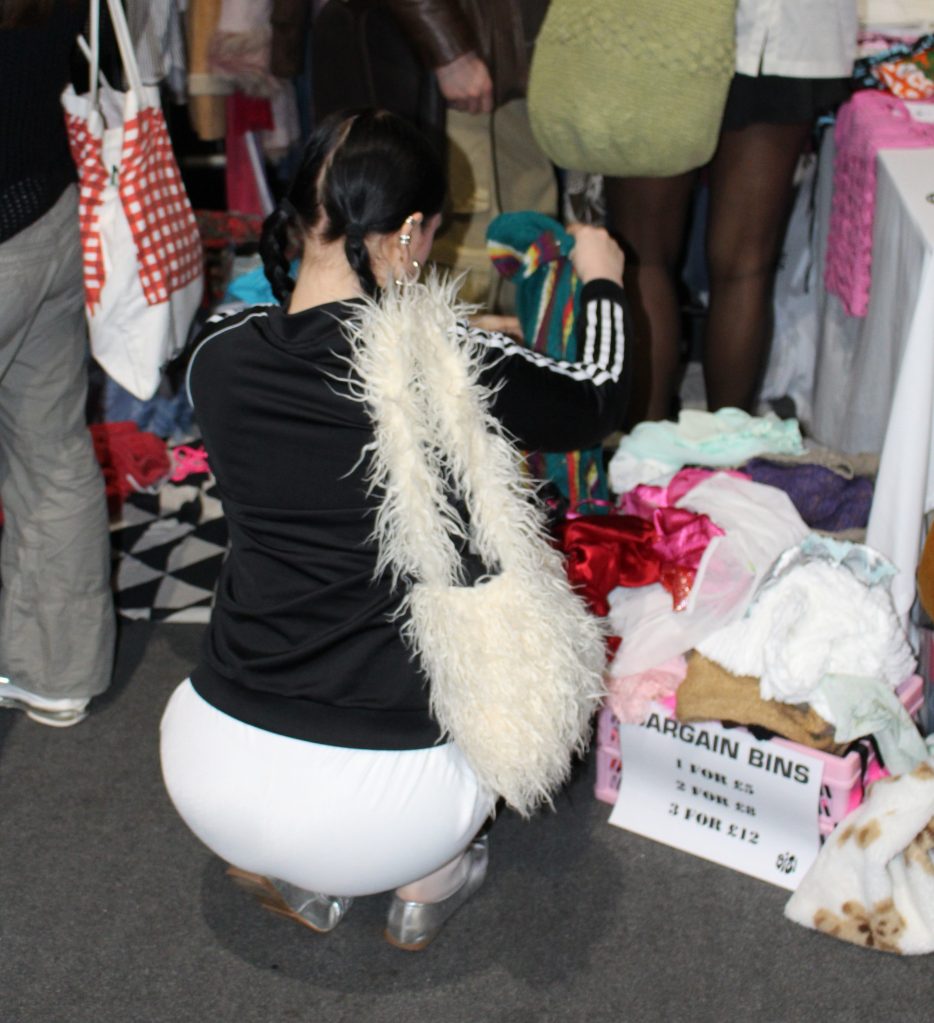
Inside a Clothes Cycle event, the vibrant mixture of aesthetics and the mingling of attendees reveal the company’s deeply rooted values. The visual environment directly contradicts traditional fashion media: the friendships forged, exchanges made, and moments shared reframe fashion into a community-driven, wholesome sphere.
‘It has such a beautiful energy in that regard because everyone is dressed so individually and so crazy in the best way. You can tell everyone is dressing from them. Some of the outfits you see are so amazing and creative – really a self-expression beyond anything else.’
Beyond personal style, the act of physically gathering in a space serves as an antidote to modern social isolation. Often, life after university can feel dimmed without a schedule full of various pub visits and brunch dates. Here, there is an opportunity to embrace Clothes Cycle as a ‘sober alternative for connection.’
The impact ripples through both visitors and vendors. Bound by shared culture, groups of young women leave these events feeling fulfilled, having emjoyed a day out centered around creativity rather than an embedded desire for male approval. Meanwhile, vendors launch businesses within a supportive ecosystem, allowing them to test their ideas in a safe space and build lasting commercial confidence. In one instance, two sellers who met as stall neighbours at an event in Manchester ended up moving into a flat together a year later. A space has been carved out for anyone and everyone to thrive.
As Clothes Cycle expands – currently developing a mobile app dedicated to fostering this community by helping solo attendees to find companions and connect before events – its foundational core remains unchanged: community over competition.
When asked what advice she would give to a young woman looking to progress in the business world, Poppy’s answer avoids standard corporate cliches, urging instead that you trust yourself and your ability.
‘I would say it’s probably a bit cliché, but just start. You’re never going to be perfect. Everything I’ve done from the beginning has been so scatty and scrambled together. But even if you just start, you get so much further than everyone else. Don’t wait for it to be perfect, because it never will be.’
In a world where spaces have been manipulated to keep women hesitant, the women of Clothes Cycle prove that by opening doors, printing the flyers, and claiming the room, the future is indeed female.

