From black velvet patches to neon hydrocolloid stars: Rochelle Troyanovsky explores how beauty brands turned our dermal anxiety into another product to buy.
Why do we hide our blemishes?
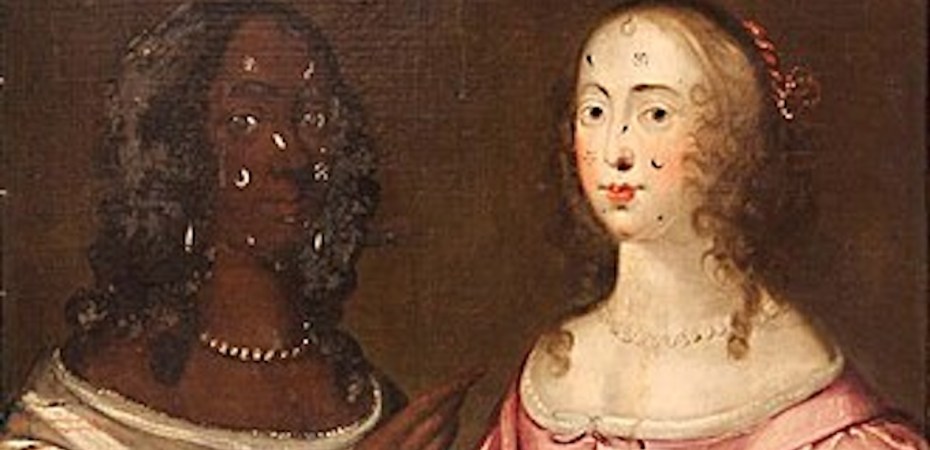
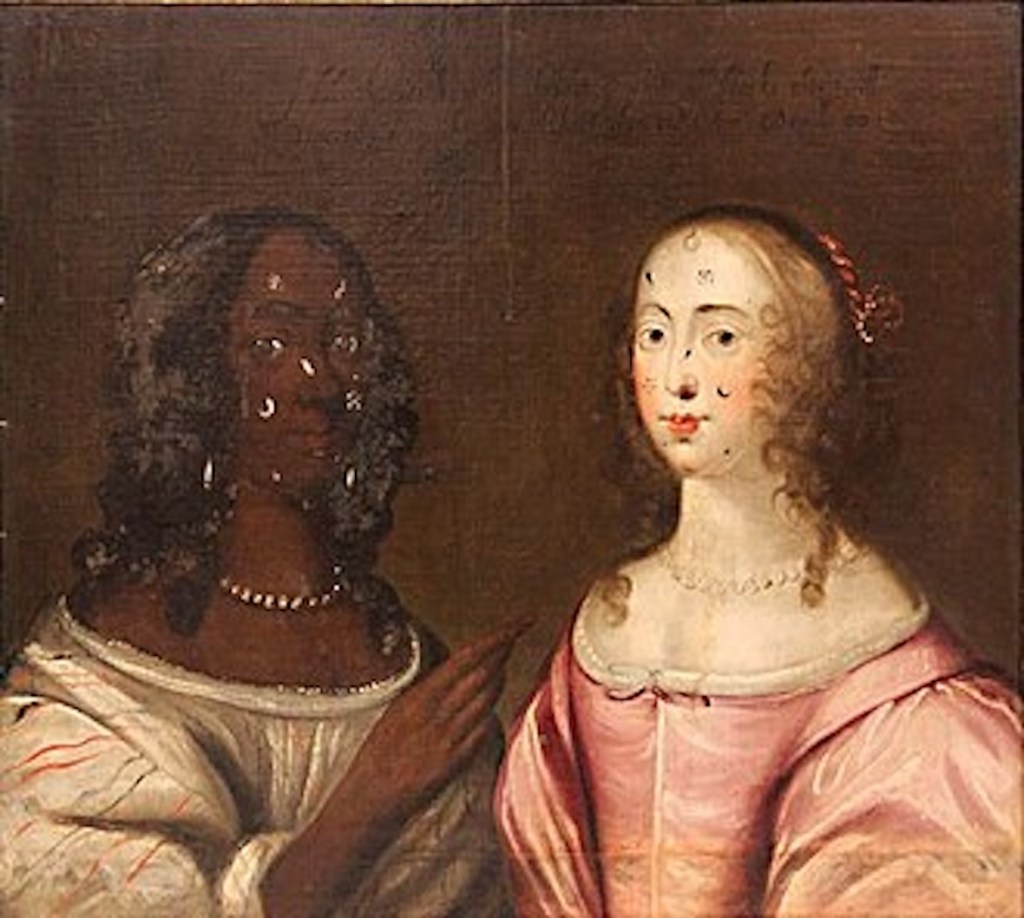
In Allegorical Painting of Two Ladies (c. 1650), two lavishly dressed women sit side by side, looking directly at us, their faces adorned with matching cosmetic patches. One rocks white patches on dark skin, the other — black patches on white.
Above them, an inscription condemns them to hell for their “proud hart”, and the Devil awaits.
The women are allegories of vanity, their beauty patches framed as evidence of moral corruption and cosmetic deception. Yet they sit at the same height, in similarly fashionable clothes, with identical pearls, looking out at us with remarkably similar presence. Through their mirrored blemish covers, the artist inadvertently portrayed them as equals amid the rigid racial and social hierarchies of 17th-century England. It is the nature of any beauty ideal, after all: to be unachievable by any real woman yet used as a pretence to control all women.
Today, a blemish might be covered not with a black velvet patch, but with a neon hydrocolloid star.
Patches, or mouches, became fashionable in Europe from the seventeenth century onwards. Used by both men and women, they were often used to conceal facial scars left behind by rampant diseases like smallpox and syphilis. The fashion grew out of the epidemic. Made from materials including silk, velvet, and leather, they were soon worn on unblemished skin because the dark shapes contrasted so dramatically with the pale, powdered complexion that was fashionable among European aristocracy.
Cosmetic and medical purposes blurred together.
Patches began visually destabilising the social hierarchy, since they could simultaneously conceal evidence of disease (and “promiscuity”, in the case of syphilis) and signal high status and wealth. In other words, the criticism was not merely of vanity. It was the disruption of “natural order” that shamed women for crossing boundaries through their skin.
In the Rococo era, patches became even more theatrical and coquettish, as they were cut into stars, hearts, diamonds and moons and placed on the face, neck and breast. The courtly fashion at the time found pleasure in artifice and exaggeration. The mouche had the power to transform the natural “defect” of the face into a playful decoration. A medical scar transformed into an ornament, a blemish made camp.
Which brings us to the modern acne sticker.
Hydrocolloid dressings existed long before “zit stickers” became a beauty trend. They are essentially wound dressings: they absorb fluid and create a protective barrier, particularly over an open blemish, while also making it harder to pick at the spot. What they cannot do is prevent acne or treat its underlying causes.
Now they come in circles, hearts, stars and emoji-like designs of various bright colours. There is something wonderfully camp about this: accessorising an active, pus-filled cyst with a bright purple butterfly or a glittery heart.
This matters in a culture increasingly obsessed with a polished, “effortless” appearance. The “clean girl” ideal often presents itself as natural while requiring extraordinary amounts of labour, money and self-surveillance. We are encouraged to cleanse, correct, smooth and conceal until the body appears untouched by life.
The acne sticker draws attention to the flaw instead of pretending the skin is flawless.
Of course, visibility doesn’t equate liberation. A star patch can be medicinal, a fashion accessory, a display of confidence, a way of hiding in plain sight — or simply a sticker someone likes.
But what does it mean when our resistance to beauty standards is turned into just another item in our shopping carts?
For those young people who don’t buy concealers, brands figured out how to commodify the rebellion against concealment. To stay socially acceptable and merchandisable, the pimple can stay visible, but only in a specifically redesigned way. Since Starface markets that the blemish can become part of the look, our faces become part of their packaging.
The rebellious little star becomes another product. Another aesthetic. Another thing to buy.
It can protect a wound and stop us from picking it. It can make an inflamed spot a little less distressing to look at. But it can also become another way of managing the visibility of the body without changing the conditions that make us feel we have to manage it in the first place. The sticker becomes a tiny negotiation between self-expression and self-surveillance. How can we ever build a stable relationship with the natural instabilities of our bodies if we feel like we must cover every sign of impermanence and variation?
The history of the beauty patch is not simply a history of changing fashions. It is a history of changing ideas about the meanings we attach to skin. A scar can be shameful or stylish. A blemish can be hidden or emphasised. A mark can signify illness, vanity, flirtation, status, or rebellion — sometimes all at once.
The women in the painting were condemned for refusing to leave their faces alone. Four centuries later, we are still embellishing our dermal anxiety — sometimes in the shape of a star.

