Lucia Fares Ruiz discusses the gendered threat of AI within creative industries and explains how placing boundaries in the digital sphere can help us rediscover our creatives sides.
She sits in a room of despair, staring at the blank page in front of her. Her mind fills with ideas, seemingly untranslatable into a legible draft. In the top right corner is the unblemished ‘Ask Gemini’ prompt, preparing to eclipse any attempt at exemplary work. On her phone, a parallel effect of frustration transmits through its inescapable standards of comparison, rejection and perfection. Living amidst an epidemic of reliance on AI and its social media alternative, this may sound like a plot you have encountered. A plot that may resonate with you. The pressure not only to adhere intellectually but also to conform to a standard of beauty outside of the classroom.
In recent years, the gender gap in creative labour has become astonishingly prevalent. With pervasive gendered structures trickling into our everyday lives, predictably, when these mix with the increased prominence of AI in creative industries, we begin to see an exacerbation in labour disruption. Recent DCMS economic estimates show the gender gap in both pay and representation between men and women is already ostensibly different, with women forming part of a minority in creative industries (38.1% of the Department of Culture, Media and Sport in 2025). Moreover, a clear disruption of human labour in creative spaces persists, evident through newspapers such as the Argentinian ‘La Nación’, which have begun to rely on AI integration in journalism and ‘information gathering for both narrative and business purposes’. However, the reliance on AI for efficient and cheap collection of data raises concerns regarding the integrity of journalism as well as ‘generating superficial coverage, especially on complex topics requiring critical analysis’ from an unbiased standpoint. Therefore, the increased dependence on AI may indeed be both creating a new form of harm and worsening the problems that exist in the creative industry at once. By reducing employment opportunities alongside increasing competition within the scarce creative job market, paired with the unequal representation of women, the gendered threat of AI becomes increasingly insidious.
Beyond these obvious barriers to women progressing in creative industries, AI’s standard of pristine efficiency has blended with social media to shape how younger generations perceive, perform, and create. This standard of performativity is carefully tailored around posting photos and videos that only show the most idealised version of someone’s day. Thus, it produces a standard of perfection which creates conflict between the focus on self-presentation and well-being, and often has a ‘more pronounced effect observed in girls compared to boys’. AI’s work does not seem to restrict itself to the professional sphere. It seeps into these social media platforms where editing pictures and videos further reinforces the standard image of what one must look like, act like, and be good at to fit in. The intimate association of social media and AI creates an echo chamber of consistent comparison, putting into question what facets of our identity and skills meet the standards of expectation that surround us. Therefore, instead of considering the increased use of AI as a tool emerging from slothful behaviour, perhaps AI is actually used out of fear that the individual isn’t adhering to the cult of perfectionism that has become entrenched in the world around them—a glass-ceiling standard of expectation.
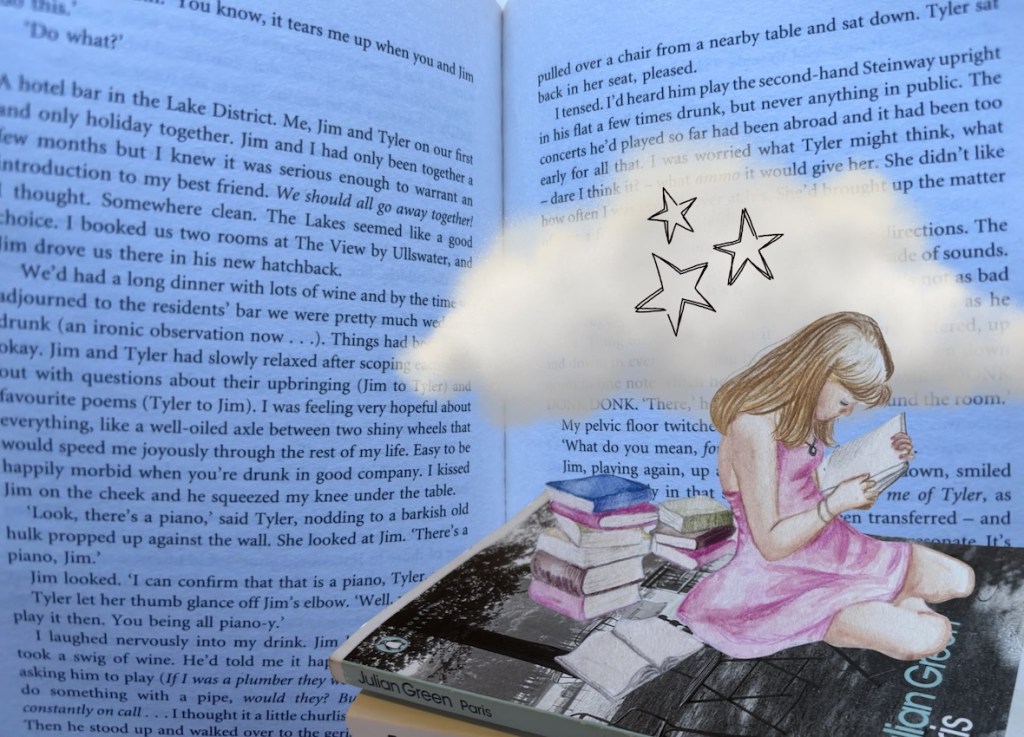
Her creativity corrodes when she begins to believe she cannot form anything remotely comparable to Claude, ChatGPT, or Gemini. Or when her creative writing piece gets rated poorly, whilst her friend uses AI to ‘secure the grade’. Her creativity corrodes when her comment section threatens the nature of her character, questions her lack of perfectionism or her chosen interests. AI promises to produce exactly what she needs in less than a minute and take away the pervasive pressure which surrounds her; in exchange for her sense of self-identity.
So then, how do we bring back the urge to create outside of the constant reliance on AI? It may all begin with private creativity, crafting a space away from social and professional pressures, where you are able to express yourself freely. This removes the anxiety of self-presentation, which, as highlighted before, produces negative perceptions when associated with social media. By starting to create outside of external pressures, turning to AI is no longer necessary. Above all, learning to create imperfectly and tracking how you progress becomes central. Instead of asking AI where to start, turn to a hobby you have never had the chance to enjoy due to the expectations associated with it. Once this becomes a habit, we are reminded of the stages of creativity and the satisfaction that comes with fulfilling each one. Thinking of ideas, attempting to execute them, altering them, leaving them and coming back to them until we feel pride when the finished product smiles back at us.
The gender gap in creativity can be an inspiring place to reclaim self-expression. By stepping out of the boundaries of expectation and refusing to adhere to the standards of performativity that surround us, we can begin to build outside of social performance and fulfil our personal creative desires. From this foundation, we can mediate a balance between acknowledging that the use of AI is ever-present in our world and having the ability to reduce our reliance on it through restricted personal reliance. This is what is required to reclaim our creativity and let it ignite our inner world.
Artwork by Chrissy Flannery

