
A play review by Laura Sawyer.
Taking a seat at the Alma Tavern Theatre, waiting for the play to begin, my first impression is of the cosy, intimate set; warm lighting, soft furnishings, and a pleasant homely feel. Little did I know that all my expectations for the play were about to be entirely subverted.
Eightball Production’s “Scenes with Girls”, performed from 8th-9th March, follows three girls navigating their twenties: Tosh (Phoebe Taylor), Lou (Hattie Millard) and Fran (Iola King-Alleyne). The play’s synopsis states: “Other friends have come, got boyfriends, and gone. So what? These girls have each other. Between them, there is love. And that’s enough. That is enough. First staged at The Royal Court in 2020, Battye’s play delves into the complexities of female sexual empowerment, the pressure to perform happiness, and the fear of being left behind in a rapidly changing world.”
On first impressions alone, the synopsis evokes themes of friendship, love and care. Whilst these are still included in the play, it is in a twisted way that defied anything I could’ve anticipated.
Tosh and Lou are at best witty and at worst plain cruel, frequently insulting their friend Fran behind her back and crudely commentating their various interactions with others. These two characters feel deeply unlikeable – and yet at the same time all-too relatable, albeit painfully so. To have so much of the play centred around two characters who aren’t all that likeable risks disinterest, and yet I remained intrigued as to how their dynamic would continue to unfold.
Chatting with director Emma Morgan after the show, she put words to my feeling of uncertainty towards Tosh and Lou. She pointed out that, all too often, we are shown the ‘complicated male character’ in media, someone who is outwardly cruel and unkind, but we are intuitively drawn to understanding their inner depth and complexities, justifying and in some cases sympathising with their cruel actions with the excuse of a complicated backstory. Think JD from Heathers, Patrick Bateman, even the likes of Draco Malfoy whose defenders took over social media during lockdown. In contrast, despite the demand for more ‘complicated female characters’, there is still an inclination towards disapproval at them, perceiving them as annoying and grating. I caught myself not extending the same sympathies in this instance, feeling averse towards Tosh and Lou and unsure whether I felt properly invested in them. By the end of the play, I felt like a part of their journeys, and had a newfound appreciation for these oftentimes unlikeable but certainly ‘complicated’ characters.
She later added, “I think Scenes with Girls is such an important play because it is so real. Miriam Battye has written female characters that are truthful and raw and every scene focuses on some of their most private, vulnerable moments. I think honest, intimate depictions of women on stage are rare and this play acts as an answer to that (…) Battye hasn’t written them to be nice or understandable or redeemable, she’s just written three believable women, which I think is one of the most radically feminist things a playwright can do.”
In this play, nothing is taboo. Candid and crude discussions around one-night-stands and partners are never shied away from, with many of the scenes immediately plunging us as the audience directly into the middle of one of these such conversations. Being invited into such an intimate and direct conversation is often hilarious as well as moving, with important themes arising through the characters’ discussions of male power, domination, the role of women, and the meaning – if there is any – to sex. If anything, I was willing the story to delve further into these themes and dissect them before us, grotesquely exposing and pulling them apart at the seams. The fast pacing of the show means in one instance we can be in the depths of raunchy detail before cutting to an emotional breakdown over a deeply personal moral dilemma, exposing us as the audience to the vast plethora of emotions of Tosh and Lou and becoming intimately close with both their deepest vulnerabilities and their more light-hearted highs. This candid depiction doesn’t hold back, delivering a wide array of different energies which the actors met the demand of brilliantly.
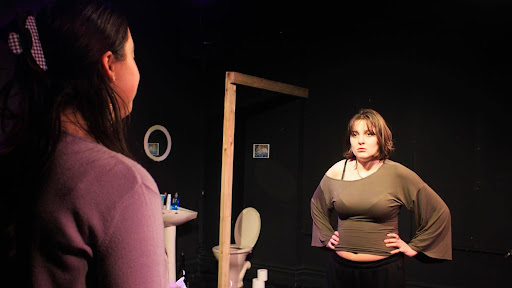
Female friendship is depicted in a new way. On the one hand, finishing each others’ sentences and brushing each others’ teeth, Tosh and Lou are the epitome of love. At the same time, the pair rely heavily on one another, dismissing or even ignoring what sound akin to cries for help from the other, and knowing exactly what cruel thing to say in an argument that will hurt the most. This tumultuous and deeply intimate friendship borders frequently on the toxic, dismissing the company of others in favour of each other and isolating themselves from the world. The falling apart and eventual rekindling of their friendship is almost agonising to watch, the audience willing the two to communicate better, to reach out to some kind of wider support network, to stop being so disgustingly rude to Fran who seems to be the nicest and most genuine of the three. Morgan notes, “the play has a timeless quality to it because it centres on a universal experience: relationships between women being disrupted by men. In this sense, Scenes with girls retains its relevance to the world we live in today. Although the characters spend the majority of the play talking about boys and heterosexual sex, men never actually appear on stage and this was a conscious decision from me. In Scene 18, when Tosh gets a boyfriend, the stage directions call for a man to enter from the audience but I chose to replace this with a voice over.”
The small cast enabled us to feel close to the characters, exposing and shining a spotlight onto the cast of three, with no ensemble or busyness to blend in with. Instead, we are presented with a stark and confronting image of the rather dysfunctional and definitely codependent girls entirely as they are, without distractions. Morgan added, “I wanted the stage to remain a space solely inhabited by those three women because it allows the focus to always be on them. For me, it was important that men exist in an abstract space in the periphery of the play so as to never detract from what the play is all about: girls.”
Unapologetically head-on, Scenes with Girls boldly exposes its female-led cast, dissecting and dismembering their seemingly perfect characters to reveal ugly and deeply insecure interiors. Having 90 minutes dedicated to confronting the messiness, betrayal, and ultimate love within female friendships is certainly my preferred way to spend a Monday night.
Featured Image: Mim Clements
