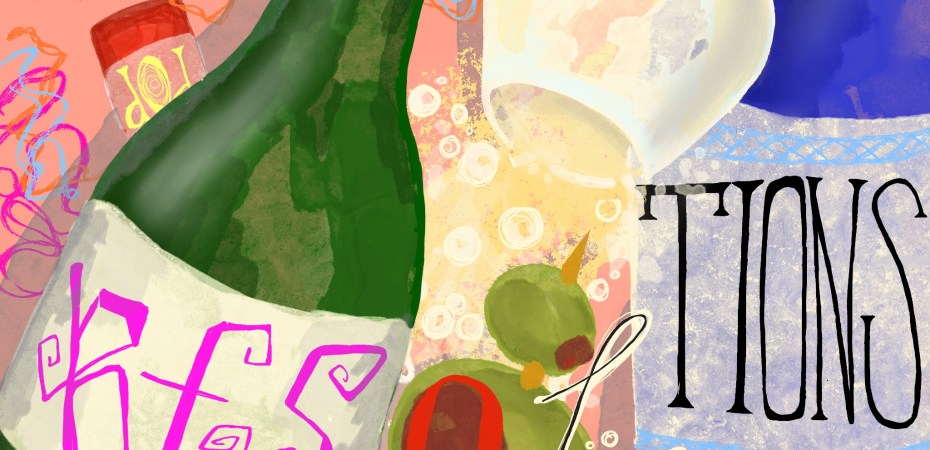
Emily Murphy explores how seasonal resolutions for women and self-improvement culture are rooted in control and restriction, feeding into how capitalism profits from their dissatisfaction.
Every January 1st, women are openly encouraged to become better.
Better at working, existing, looking, and all the while consuming minimal carbohydrates. Resolutions are packaged as empowering from within, perfecting oneself, but the fine print is clear: women, as they currently stand, are not satisfactory. A new year, and with it is pushed the promise of a new you – tinier, more controlled, more ‘ideal’.
We’ve normalised this seasonal shame ritual so thoroughly it now feels inevitable, with light conversation topics of discussing new routines and habits. Improvement isn’t optional, but automatically assumed, inevitable and basically inescapable. Michel Foucault (sorry, him again) would call this self-surveillance. Modern power does not need a formal authority police or referee when women can monitor and punish themselves through planners, calorie trackers, step counts and countless ominous notes app documents named “2026 Goals”.
Capitalism is happily married into this arrangement. A self-managing woman is profitable, and easily influenced and controlled. She is easily encouraged to buy the newest fad weight loss treatment or detox supplement. She is the ideal consumer, with her productivity, efficiency and endless insatiability and disappointment with herself.
While men cannot be discounted from this annual ritual (of course), the gender asymmetry is glaringly obvious. Male improvement tends to be to actively grow, be bigger, be better. Their goals of muscle gain, entrepreneurial progress, and strength training tend to be additive, active. Women face a completely contrasting array of goals: eat less, weigh less, speak less, use up less space – see a pattern? Feminine self-improvement centres around, historically, minimisation.
Writer Susie Orbach diagnosed this widespread phenomenon in the 70s: women’s relationships with eating are (as we all know) direct outcomes of beauty standards and patriarchal expectations of restraint and womanhood. Thinness isn’t just pretty on Pinterest – its intrinsic links to discipline, purity and desirability means it strikes deeper than purely an aesthetic.
This leads us onto anorexia – patriarchy’s favourite and most romanticised disorder. Feminist theorist Susan Bordo argued that anorexia is not an alien pathology but an intensified ‘performance’ of a normative female. The anorexic body does what the resolution culture asks of every woman: resist your appetite and shrink.
No, resolutions do not ‘cause’ eating disorders, but the normalisation of restriction enables and romanticises them. The behaviours – restriction, tracking, obsessive self-discipline – result in applause for the month of January.
These days, the Tiktok ‘clean girl’ aesthetic has replaced old school diet culture with something prettier, scarier, and much easier to access. She eats yoghurt with chia seeds, drinks something green and full of vegetables, journals at sunrise after yoga, and never craves McDonalds. Her hunger is theoretical, and saved for her Kindle and her academics. Clean girl is thinness rebranded as wellness: there are exceptions, but the anorexic level discipline with influencer lighting is just as concerning as the 2010 Tumblr Thinspo posts.
Before Tiktok, Tumblr perfected the romance of a thin body – all bones, no cellulite in sight. It aestheticised self-destruction and minimisation, making it poetic, beautifully tragic, and consumable for all. Tiktok has no such poetry, but instead provides instruction and logistics. Tutorials, what I eat in a day (spoiler: not much), fasting windows, and body checks create a thirst for thinness in minds where Labubus and Jellycats should be.
Once again, this does not mean that social media invented these issues, or that every woman scrolls her way into the hospital. Platforms such as these intensify the comparison culture that has always existed between women. Quick subtle glances around the friend group are long-term womanly acts of this. However modern day media has turned a woman’s body into a lifestyle you can envy, study and replicate. The reframing of this content as self-care or productivity hides it behind a veil of innocence. The clean girl tells us to cleanse, the wellness girl preaches a detox and the productivity girl tells us to act now, wake up at 5am and get your pilates leggings on. At some point, it was forgotten to ask: improve for whom? Yourself? Your mother? Your future husband? The pedophile on the bus?

Improvement reflects the values of the culture demanding it. Ours demands discipline, restraint, and minimisation of the feminine appetite. Appetites make women unpredictable. This can easily be applied to almost anything: hunger for change, hunger for a voice, hunger for freedom. But, hungry women are chaotic. Patriarchy hates chaos.
Viewed collectively, these rituals fight a quiet war against women’s desire, agency, independence: she is banned from eating, being messy, being full. The ideal woman is not just thin, but easily managed. The point of this article is to examine WHY we are improving, and for whom. When the pressure to become better becomes normalised, opting out becomes an act of resistance. Contentment becomes radical.
The feminist resistance from New Year’s resolutions is not to reject improvement, but to insist that improvement be chosen, rather than assumed. Eating disorders should be seen as more than an individual tragedy, but a preventable cultural failure. Feminism has always imagined women as larger, more capable, hungry.
If refusing to improve feels rebellious, it’s because it threatens to undermine the assumptions social norms lay their head upon. Maybe the most radical thing a woman can do is to stay exactly the same.
 That's What She Said Magazine