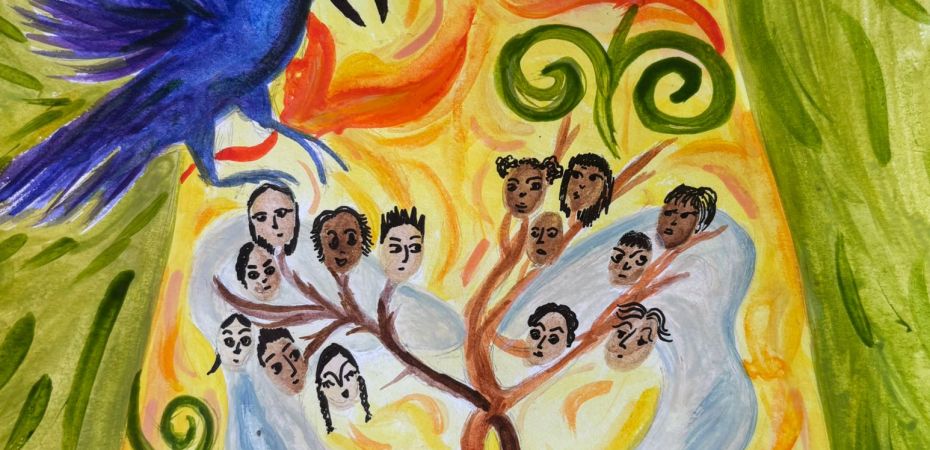
Tylah Hendrickson explores the parallel exploitation of nature and the reproductive body, highlighting how modern systems, such as the rise of AI, emphasise a systemic, male-centred urge to control and commodify generative power.
Just as our biological mothers are with us at the beginning of our life cycle, so is nature. And, as with our mothers, we frequently hold an expectation of limitless provision–an allowance to ask, take, and imbalance a relationship that must be reciprocal for the survival of both parties.
‘Mother Nature’ is a term I don’t hear a lot anymore: it suggests a symbiosis between us and the natural world. The phrase personifies a force that nurtures life, whilst easily bending its inhabitants at will with uncontrollable natural disasters and seasonal patterns. But this overarching notion has recently been drowned out by humanity’s impact.
This nurturing concept is inverted, becoming something to control and exploit for the sake of material gain. And thus, ‘mother nature’ gets recast as ‘raw material’ in a modern, post-industrial framing. We see this in social policy: the UK’s Biodiversity Net Gain, whilst implementing incentives to reduce structural planning on habitats, calculates the value of complex ecosystems–only a 10% proposed net gain is required for planning permission to be approved, and a surprising number of developments have been exempt from BNG. In 2024, more than 75% of non-householder planning applications claimed exemptions from BNG requirements (e.g. large-scale housing developments, brownfield sites, commercial developments). In the late-capitalist market, land is privatised and pillaged for shelf stock, rather than valued as irreplaceable, self-sustaining networks to live alongside.
Some (some being me!) may argue that this isn’t just about how we treat the planet, but a reflection on how care and sustainability have become gendered and undervalued amidst the logic of extractive capitalism. In each aspect of empathy–private and public–the drive to control creation has moved to the forefront.
This logic finds a disturbing echo in psychoanalysis. Countering Freud’s ‘penis envy’, ‘womb envy’ is a concept theorised by Karen Horney in her early essays and her 1936 collection, Feminine Psychology. She describes a much more salient, real world counterpart–a subconscious, culturally curated male resentment of, and fascination with biological creation. When this envy is scaled to a socio-economic level, this lack of control compels a plundering of the generative power that the system cannot claim.
Rightfully, this theory can be perceived as bioessentialist. Anatomy is not a defining feature of womanhood, nor is biological reproduction the sole source of generative power, and viewing this as innate to an entire sex would be reductive to any sort of social change. However, viewing both uterine reproductivity and the environment as terrains of experimentation and control links the parallel conquests and motivations of masculine-centred thought, and the extractive logic of capitalism.
While the sexes are equal, the generative power some women possess may seem inconsistent with the sex-based power dynamics taught to young adolescents. Simply put, if a system teaches one group they hold dominant power, perhaps the biological fact that they cannot literally make people may foster inferiority despite the societal framing of male-centricism. The historical project of this logic has forced women into marriages, controlled women’s reproductive rights via legislation, demonised the reproductive body, and hoarded resources for survival–in both the past andpresent.
And whilst I do not believe this is a known individualist desire, or that all cis men are inherently controlling, or that all cis men literally want to have uteruses (evidently)–the historical patterns provide proof of this systematic logic. This is a comment not on individual identities, but on rooted cultural patterns.
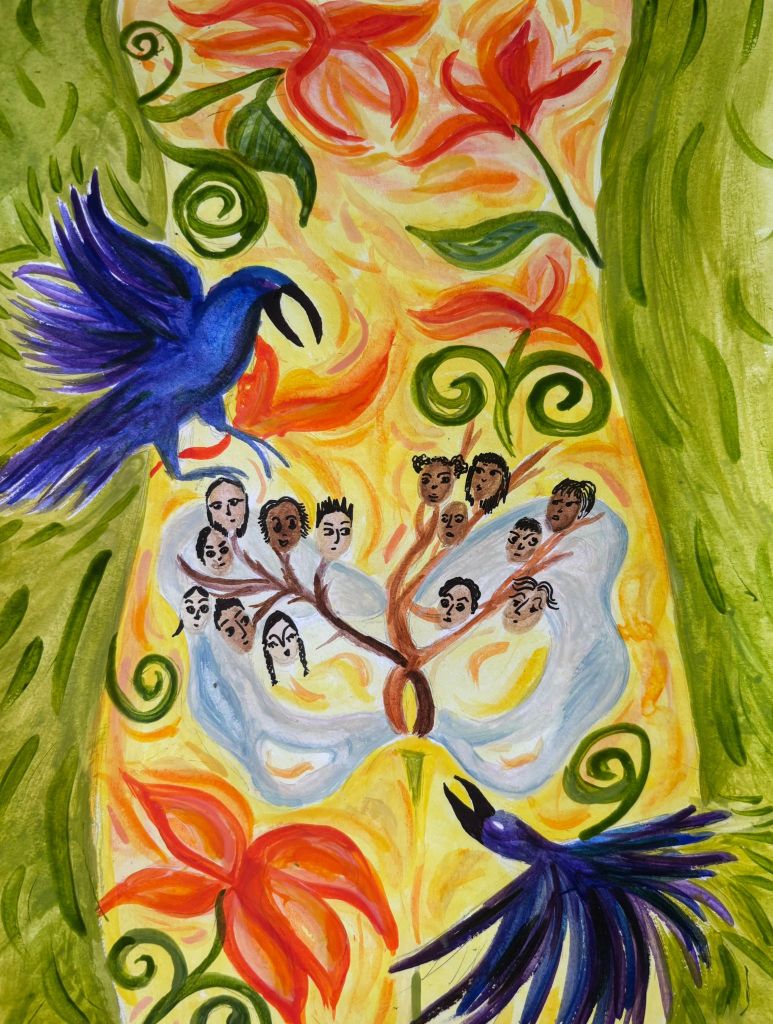
Men (it could be said) seek similar fulfillment through ‘external’ creative achievements. This envy-driven logic finds itself in the tech-driven urge to industrialise creation itself: AI art generators seek to automate creativity, whilst algorithms aim to commodify human connection, replacing the nourishment of community with an efficient faux-friend. Significantly, women are adopting AI tools at a 25% lower rate than men, with primary concerns about ethics. This creates a paradox: the less women use AI, the less their values and perspectives shape its learning, which may allow the very logic discussed thus far to reinforce itself in algorithms. It also doesn’t help that the individuals leading these AI advancements are so embedded in individualist-capitalist thought.
When care becomes optional, the resource-rich womb that’s nurtured us becomes compromised and reaped, both domestically and on a geopolitical scale.
The antithesis to this extraction is not dominance, but reciprocity. This is the common logic embodied in the land ethics of many Indigenous nations and the Andean principle of buen vivir (living well in community and with nature): to co-exist harmoniously with the foundational practices of life itself. These frameworks are not fundamentally incompatible with market capitalism, but they demand a radical reorientation: that consumers understand the true cost of what they buy, and that companies are held accountable for their social and ecological impacts. It requires us to recognise care as the fundamental, skilled work needed to sustain all life. But that sounds just a bit too nice for the cards we’ve been dealt, doesn’t it?
This reversal of creative primacy, the attempt to build a world where man is the sole author is the ultimate expression of this envy. No woman was born from the rib of a man, but every man does originate from a uterus: that is an undeniable truth that science or technology cannot replace.
 That's What She Said Magazine