Carly Synnøve explores whether performative masculinity is a genuine rejection of toxic gender roles or a hollow aesthetic that rewards insincerity.
Does performative masculinity allow men to break free from toxic gender roles; or is it a manipulative mating ritual rewarding men for insincerely held beliefs? The answer lies in intent.
The Overheard performative male contest in mid-October was very well attended, boasting an impressive 21 candidates vying for the title of ‘number one performative male in Bristol’, with prizes including branded Overheard tampons, condoms, and a tote bag. A resplendent bounty – all were hooked. Yet something felt a little off.
Sanitary products were flung to the masses in a bid for victory; heartfelt Chat GPT poetry was performed; guitars, strung about necks for decoration, lay unplayed with (actually quite amusing) excuses of ‘unusual tuning patterns’ given as to why they remained unstrummed.
I understand the satire of the event, I found it superficially funny – the contestants I know are lovely people without malicious intent; performing because they too found the concept funny. My favorite quote from one of the contestants was ‘the most performative thing about me is my desire to perform in bed’, that sure is what she said.
This article is inspired by these events, but not aimed as slander against Overheard for pulling through with an amusing concept, or the contestants themselves for playing-up these traits familiar with those chronically online.
So, what is the issue?
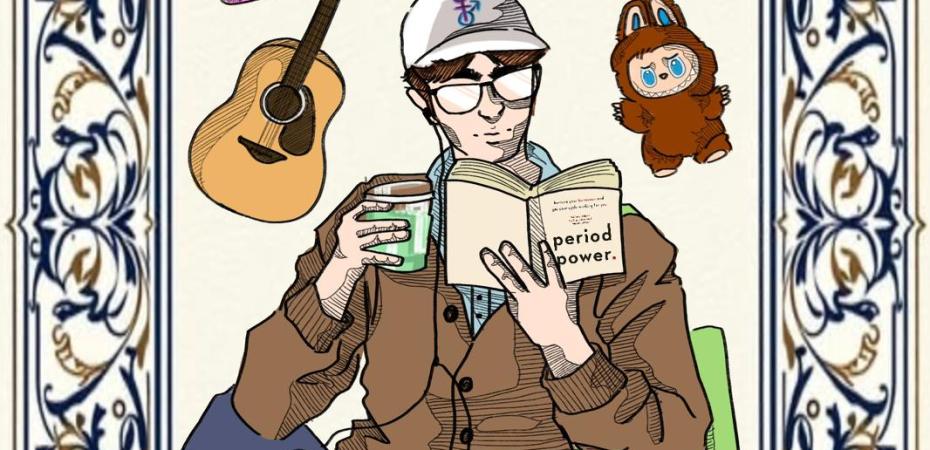
The classic performative male drinks matcha, carries around (unread) feminist literature (The Bell Jar who?) in a Labubu-clad tote bag, and shallowly claims to enjoy artists such as beabadoobee, and Clairo.
The issue here is not the activities themselves, it is the insincere nature of it. This article is not meant to dissuade anyone from venturing into any hobby, or starting their learning journey on any particular global issue. We do not want to gate keep anything, and want to serve as a resource for everyone.
Anyone should be welcomed in exploring hobbies, even if these could be perceived as being gendered, and as an intersectional feminist magazine, we encourage everyone to explore feminist media. The aesthetic of the performative male does seem to intersect, and draw inspiration from queer culture. But when this is not genuine, and is done to be manipulative, it becomes an issue. Having these characteristics if genuine is not a bad thing AT ALL; the issue comes with the performativity of it. Which is the whole point of the performative male.
How can we then differentiate between someone who actually in good faith cares about these things, and someone who does not have these positive motivations? Intersectional feminism is not an aesthetic – it is a framework for understanding how different aspects of a person’s identity, such as gender, race, class, and sexual orientation, combine to create unique and overlapping systems of discrimination or disadvantage. When people use the phrase for superficial gain, it perhaps dilutes the meaning of this concept, and alienates people who want to participate sincerely.
You can’t distinguish between allies or frauds based on the contents of their tote bag. I’m pretty sure the percentage of performative vs genuine feminists is small, if not insignificant, and most people are trying to be good people. I interviewed one of the contestants (who wishes to remain anonymous) from the contest and here is what they had to say…
Q. How much of what you did was acting versus natural behaviour?
- For me most of it was natural. I identify as Gender Fluid, and I express myself through my dressing. I am more myself, more confident with my nails painted and funky rings on. I read feminist literature as part of my degree and because as a queer person, I relate to the struggles of women. However, the show of carabiner pads and tampons was acting. It was trending on social media and could help me win the competition.
Q. How do you feel about being seen as a performative male?
- I have mixed feelings about it. I fear that my personality, my values and my expression would always be perceived as an act. Everything I do will be perceived as an artificial characteristic to impress women. I do like the attention from the trend, and I feel the way the traits I inherently have are more accepted rather than outcasted.
Q. To what extent do you think gender is performative; how would you define masculinity?
- Masculinity would be traits that the dominant society would usually associate with a man. Though, I firmly believe that all traits are just human, and labelling something as masculine or feminine closets and locks our true selves. I think gender is more narrative than performative. It expresses a true human story. The point when you corrupt your story to impress others, it turns performative.
This interview made me wonder: is every facet of life performative, especially in the age of social media? There seems to be a blurry line here between genuineness and acting – where does one end and the other begin? What are our actions ultimately for if not our own self gain?
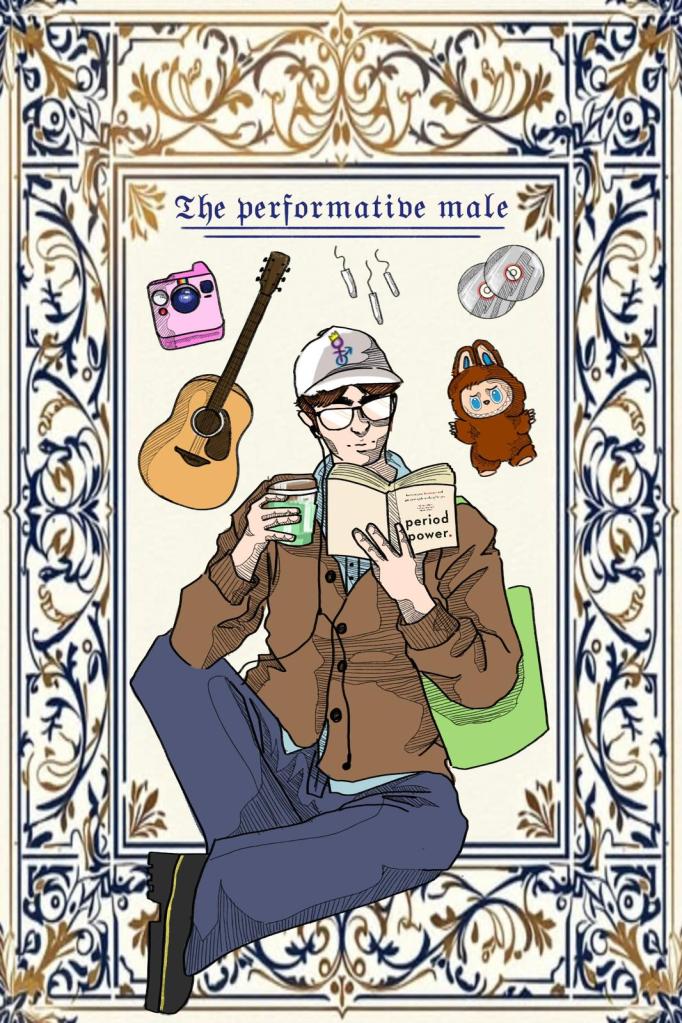
Through a combination of capitalism and patriarchy, women in the UK (at least) have psychologically been made to feel like they should consistently be buying into the latest trends, ever glowing up and evolving to appease the market – to always perform and maximalise their social capital. Not every woman does this, but advertising and the innate human desire for comparison and self-improvement does make it hard to escape. Even going against this idea means you have still considered it, and ideally it wouldn’t even have to be considered at all. Is the ‘performative male’ phenomena a way of men experiencing this voyeurism that has been so prevalent for women in late stage capitalism? When considering the many accessories associated with the performative male – Labubus, Clairo vinyls, baby tees – this does seem to be true. Men are finally getting a taste of what it means to perform, and what it costs to be ‘trendy’.
Whilst writing this, I have been thinking about this famous Margaret Atwood quote – ‘Even pretending you aren’t catering to male fantasies is a male fantasy: pretending you’re unseen, pretending you have a life of your own […]. You are a woman with a man inside watching a woman. You are your own voyeur’. Are the social currents now revealing themselves to reflect this onto men as well? How does one free themselves, truly, of the opinions of other people? Is it too late?
So – is this another TikTok micro trend, or are performative males here for good? I hope at least the reading of feminist literature will stay in vogue. Men who pretend to be feminist just to get with women can get out. Men who just have fun hobbies are very welcome.
I’d like to leave with an open-ended reflective question – who are you when you’re not performing for anyone?
 That's What She Said Magazine