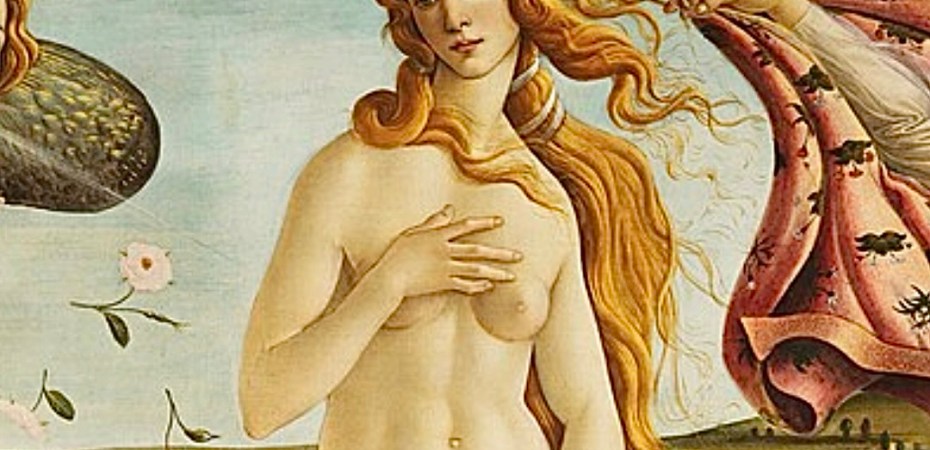
Eve Davies discusses the rise of the SKIMS faux-bush trend and what it reveals about the commercialisation of natural body hair.
Move over glass skin and bleached brows, the beauty trend of 2025 is the bush. Discard your razors and hide your wax strips, ladies; hair down there is back. Or so we’re told. Not the bush in its unruly, living state, of course. No, Kim Kardashian’s version: a faux-fur thong by SKIMS. A £34 ‘luxuriously textured’ replica of the body hair you already grow for free.
Naturally, it sold out within twenty-four hours. It’s funny, in the way dystopias often are, but also faintly grotesque. The SKIMS bush isn’t just a lingerie gimmick; it’s a perfect artefact of our cultural moment. Proof that even ‘natural’ femininity must be rebranded and resold before it’s allowed to exist.
For decades, women have been taught to file themselves down to skin. Smoothness was discipline as well as cosmetic, a visible declaration of control. The hairless body became a moral ideal: a blank surface that signalled civility, restraint, and, crucially, whiteness. In Plucked: A History of Hair Removal in America, Rebecca Herzig traces how the presence or absence of body hair has long been tied to race, class, and power. Nineteenth-century white Americans mocked Indigenous grooming rituals, then came to associate women’s facial hair with racial inferiority. Smoothness became code for respectability and hairiness was a mark of being too much.
That moral logic now survives under new branding. ‘Clean.’ ‘Refined.’ ‘Luxurious.’ The language may be softer, but the command is the same. The SKIMS thong only makes it visible again. It’s not satire or subversion, just the logical conclusion of a beauty ideal so total it must now simulate the very thing it erased. Texture is no longer lived but manufactured, something to purchase, apply, and tag in a story.
As Vogue noted, the ‘return of the bush’ had already been creeping up the trend cycle. Maison Margiela’s spring 2024 couture show displayed sculptural merkins; Poor Things turned pubic hair into cinematic ornament when actresses wore merkins while portraying Parisian brothel workers. Costume designer Holly Waddington told Coveteur, ‘In our culture, we don’t want to see pubic hair. So we made a thing of seeing pubic hair.’ It was meant to shock and it did.
As with every runway provocation, it only took a few months for rebellion to filter into the mainstream. And why shouldn’t it? Seeing people reclaim their natural bodies is empowering. When artist Sujindah’s ‘full bush in a bikini’ videos went viral earlier this year, they were hailed as a joyful queer-coded resistance to the razor. Refusing to shave is not just about personal preference; it’s a radical act of defiance against beauty standards rooted in white patriarchy.
Enter the SKIMS faux-bush thong: the final boss of the hairlessness debate and of feminist aesthetics itself. When the campaign first dropped, the reaction was predictably polarised. Half the comments called it ‘hilarious’ or ‘disgusting’, with the other half insisting it had gone ‘too far’. Most of the discourse stopped there, circling the question of taste. Is it empowering or gross? Rather than what it actually reveals about how femininity is packaged. The joke isn’t the bush itself, just that even transgression now comes pre-approved by a brand.
And here’s where growing a bush for a trend becomes a problem. Once SKIMS gets involved, rebellion turns to retail. The brand isn’t selling body hair. No, it’s selling the idea of resistance, neatly detached from the body that once carried it. The second the bush went viral, it stopped being radical. What began as reclamation (women embracing texture and taking back their bodies) was quickly flattened into a hashtag, a purchasable aesthetic. The SKIMS faux bush is just the logical conclusion: a mass-produced replica of rebellion. Debating whether it’s ‘gross’ or ‘empowering’ misses the point. It’s profitable either way.
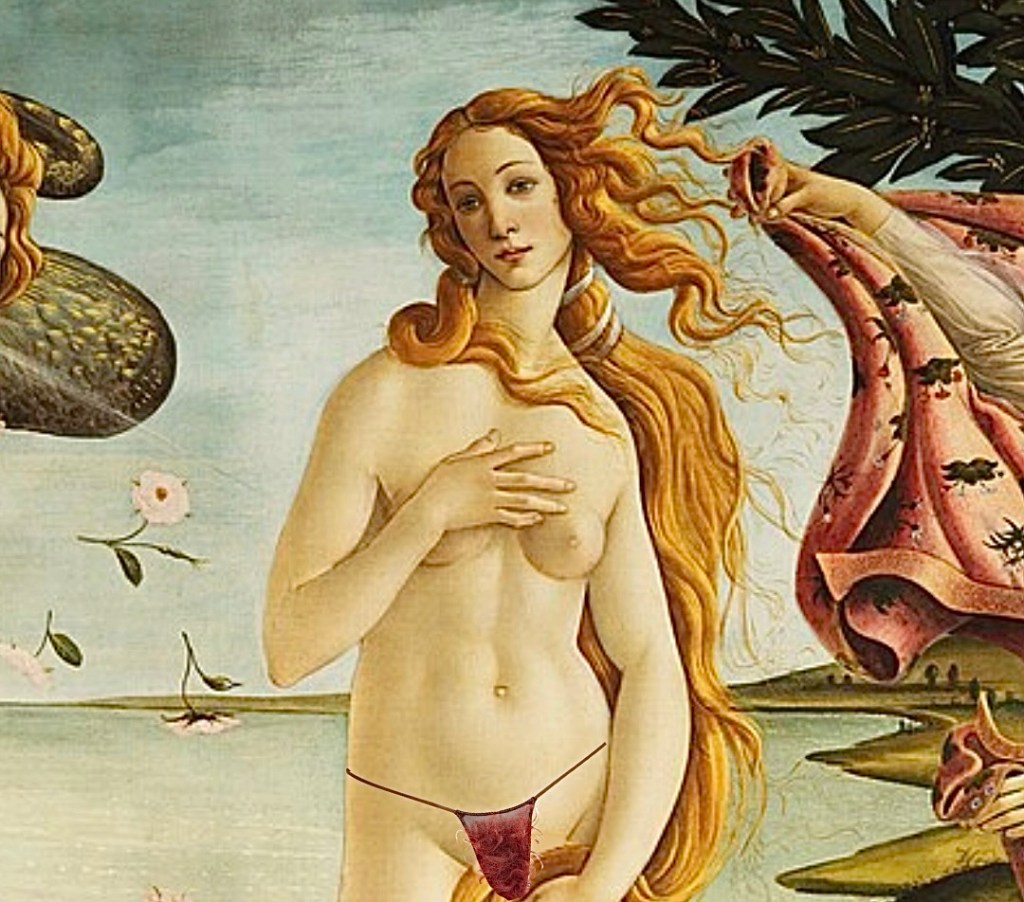
And we already know how it will be worn, against skin stripped bare, an imitation of what was never allowed to remain. The irony is almost cruel. Kim Kardashian isn’t known for embracing the bush; she’s known for perfect surfaces. The fake bush doesn’t conceal anything. It just covers the wound of absence, mere texture.
The Kardashians have long mastered this exchange. Their empire thrives on contradiction, borrowing features once condemned in Black and brown women, then refining them into a marketable neutral. Texture, curve, and depth are rendered consumable through surgery, filters, and light. The SKIMS bush continues that lineage, turning what was once coded as unruly, racialised, or queer into a soft, purchasable surface. Every backlash is already priced in. Outrage becomes marketing and disgust converts cleanly into engagement metrics.
That’s the real trick of contemporary femininity: nothing escapes the circuit. Every gesture of authenticity and act of exposure is instantly reabsorbed. And this time, the joke’s on us. Because while we laugh at the absurdity of a fake bush thong, we’re still buying it and feeding the machine that convinces women to purchase what their bodies already know how to grow. The SKIMS faux bush isn’t just absurd, it’s grotesque. It’s a monument to our craving for perfection, to queerness stripped of danger and rebellion made brand-safe. So the real bush lives off-camera, unmonetised and messy, while the SKIMS version sits smug in its packaging, triumphant that we’re talking about it at all. Meanwhile, Kim Kardashian laughs all the way to the bank.
I’m in full support of the bush. The one you choose to grow yourself, that is.
 That's What She Said Magazine