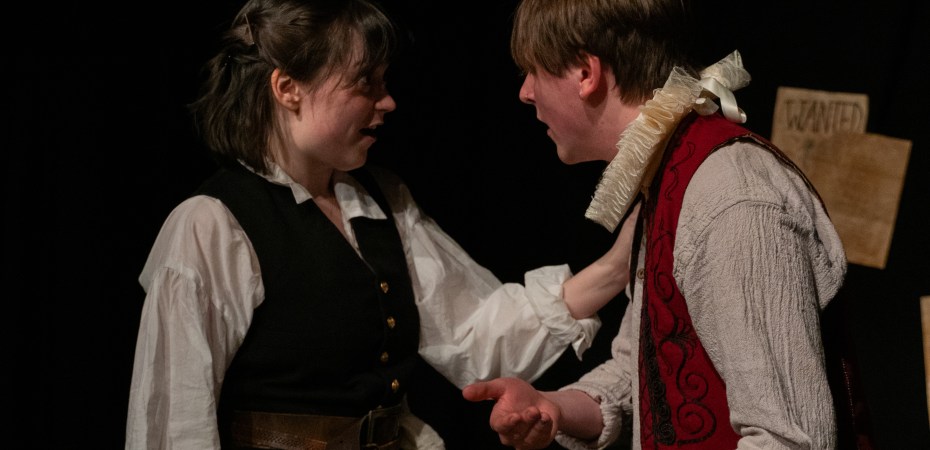
TWSS’ Ruby Smith reviews the newest production Tomboy Pulp, exploring its themes of gender non-conformity and mysterious women.
Last week I was lucky enough to catch Tomboy Pulp’s latest play, Breeches. Although the performance took place in the upstairs theatre at the Alma pub in Clifton, the audience were transported to a slightly more historical drinking location – the backrooms of a Tudor England tavern. Here we followed the story of Ros, Tom, Morgan and Fran – four people trying to keep a tavern afloat while balancing the complications of being queer in the 16th century.
Ros, played by Grace McGee, is a budding playwright. As arguments break out around her, she writes them all into her work, offering a complex introspection into those on stage with her, in real time. McGee offers a compelling performance of a young woman plagued by the contradiction of wanting to be known and recognised for her work, but simultaneously desiring to keep her sexuality and private life hidden. The inclusion of Ros’s writing in the script offers an interesting structure, as we see the lines between real life and fiction blur. Ros has great talent but fears her own power and influence. Particularly in the latter half, her character explores what it’s like to take control and start manipulating the people that are manipulating you.
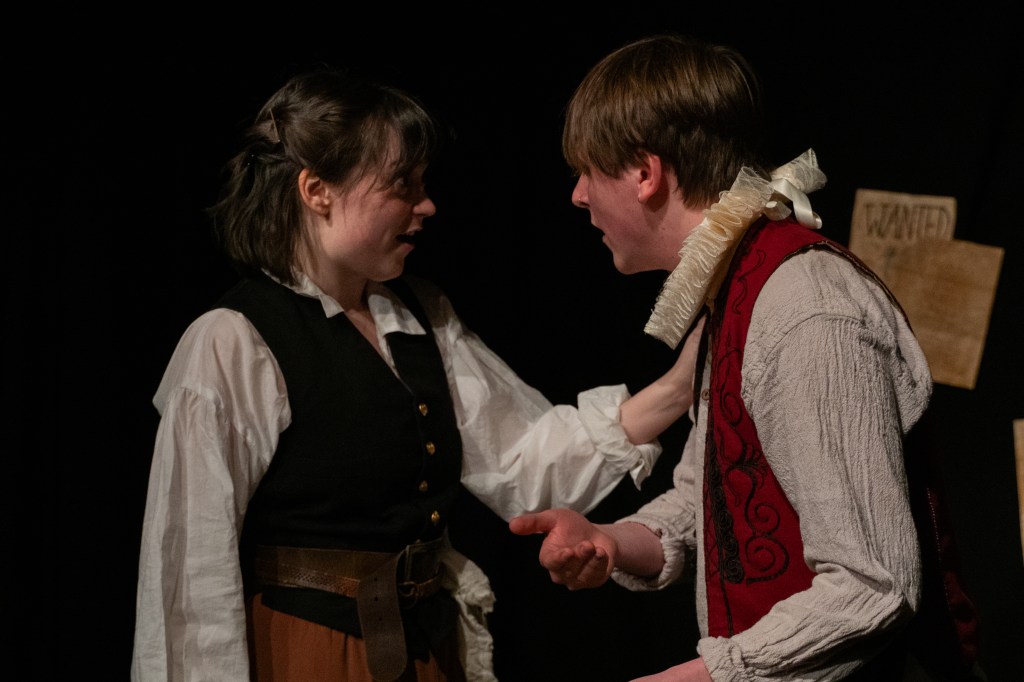
Ros’s close friend and unconventional partner, Fran is played by Jamie Druce. Fran is an actor and keen to one day make it big. He also offers to practise and perform some of Ros’s work to help her with her writing. Druce offers comedic relief but also plays a role much deeper than this. With a highly-strung and anxious disposition, Fran spirals into conspiracies once his co-star dies and rumours of a curse spreads. Like the other characters, Fran conceals his gay identity. Tensions rise and arguments transpire, after he is accused by his friends of not playing it safe enough. As the only male character in the cast, the play offers an interesting subversion of gender norms. Fran is easily manipulated by the women around him and because they know the truth about his identity.
One of the characters with a little more control over the others is Tom, played by Jemima Hurst. Tom, or one of the characters many other pseudonyms, works mysteriously on the docks and is usually found up to no good. Dressed in traditionally masculine clothes, Tom’s character open up questions surrounding cross-dressing and gender in the Tudor period. As common as it was for young men to perform as women on stage, we see the harsh persecution Tom faces for refusing to conform to gender boundaries in the streets. Hurst’s performance is passionate and emotional. The audience flicker between sympathy and disdain towards Tom, as we see try to understand where their real loyalties lie.
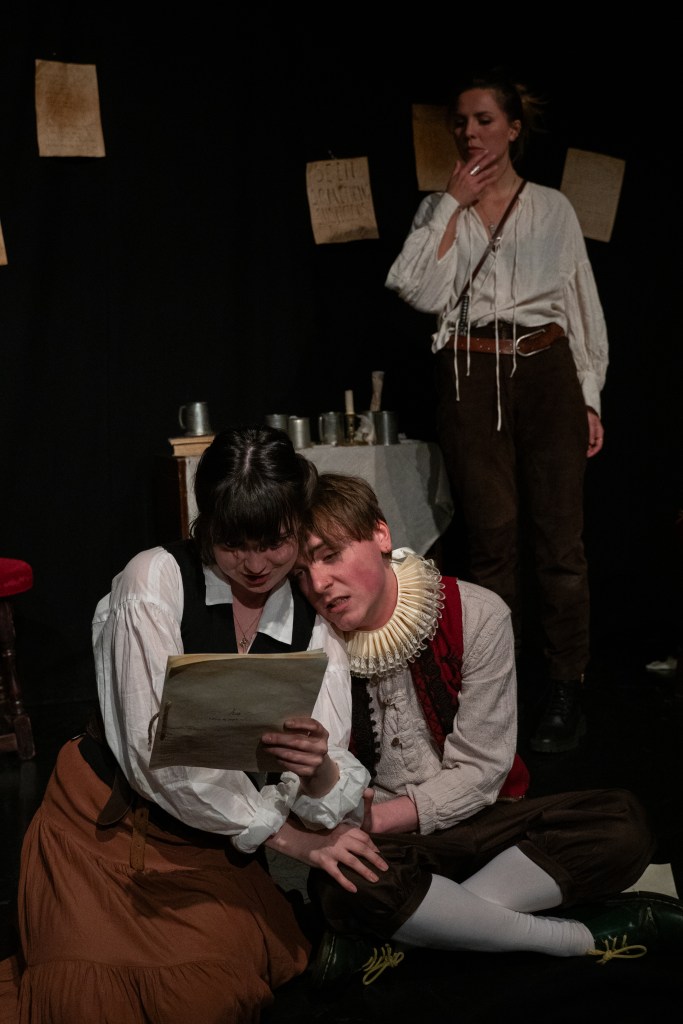
The one person who Tom might actually hold respect for is Morgan (Lily Walker). As the owner of the tavern and aunt of Ros, her responsibilities are constantly catching up with her. But these aren’t the only things on Morgan’s mind. As we come to find out a complicated past haunts her in more ways than one. Morgan seems dedicated to moving forward and making do. However, the actions of those closest to her seem to prevent this from going as smoothly as it could. In the latter half of the play, Morgan becomes more involved in their infighting and ends up exposing some of her own secrets in the process.
All four characters operate under fear. Fear of being found out, fear of each other and fear of their own secrets. The writing plays on Tudor concepts of gender, utilising the cultural fear surrounding witchcraft and mysterious women. None of them can be their true selves publicly. And this fear spills into their private lives, as all of them are too terrified to trust one another with the real truth.
The production company, Tomboy Pulp say they are dedicated themselves to telling ‘the stories that might have been’ and rethinking the historical canon to include queer people. This fundamentally describes the message of Breeches; an exploration into hidden lives and the accounts that haven’t been recorded. This was an excellent play with fantastic performances and clever writing.
 That's What She Said Magazine