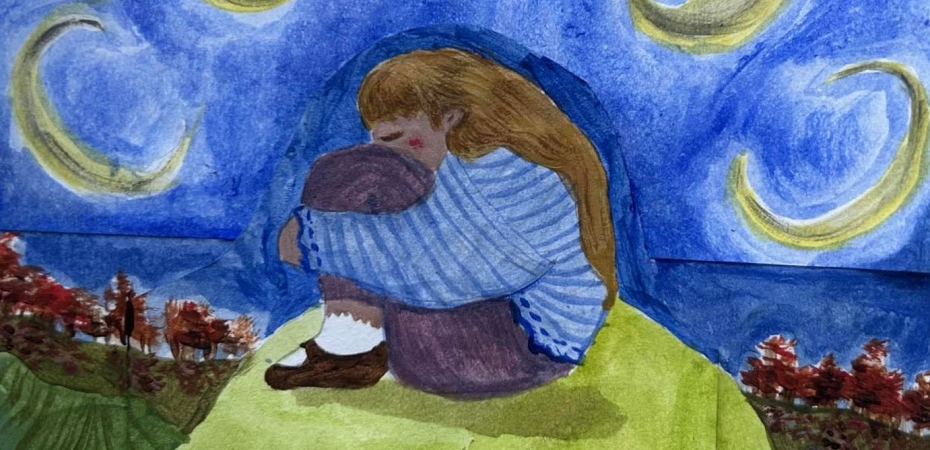
Maya Mellion Langridge explores the cyclical energies of the ‘Map of Inner Seasons’ of a menstrual cycle. The article calls for a channelling of our cultural narrative towards menstrual affirmation, as opposed to patriarchal distaste and denial.
Autumn is the season of transition, and this can be felt deeply. As the leaves fall we might feel a sense of loss, lethargy, or lack of groundedness – a natural, yet at times uncomfortable ebb of energy amidst the hectic pace of uni. It may feel as though our energy withdraws, retreating to an inward focus, and a lot of women, including myself, are reluctant to welcome their premenstrual phase, the Inner Autumn of their cycle, for this reason.
Alexandra Pope and Sjanie Hugo Wurlitzer first conceptualised the Map of the Inner Seasons to mirror the four energetic phases of the menstrual cycle; the Bleed, Follicular Ovulatory and Luteal Phase. The Inner Seasons can give direction for the distinct energy and powers each phase offers to us, so that, in our awareness of these, we can nurture and channel them. The most crucial thing about this map, is that there is no right way for how it ‘should’ look; it is about following the seasons of your unique cycle, and how you experience them.
The Luteal Phase is the period of around 10 to 17 days (this timeframe will vary among women, as well as from cycle to cycle!) between ovulation and bleeding. The follicle which has released the egg (if your body is currently ovulating) closes and morphs into the corpus luteum, producing progesterone which will rapidly increase in the body. Progesterone peaks in the week before the (potential) bleed, which is when women typically will experience the height of their PMS. This latter part of the Luteal Phase, approximately day 20 to day 26, is our Inner Autumn. It can not only bring the unwanted symptoms of bloating, cramping and soreness, but also fatigue, waves of anxiety, irritability, and premenstrual depression. The current medical theory for low mood during PMS is the imbalance of Oestrogen and Progesterone, causing a dip in Serotonin. The archetypal 28 day cycle, however, is not a one-size-fits-all mould, and when we point to menstrual pain, both physical and psychological, the medical approach may amount to only a partial explanation, ultimately insufficient in encompassing the gravity of what we’re feeling.
In my experience, Inner Autumn usually will feel like a sudden jolt from my Inner Summer. The Ovulatory Phase is characterised by fullness and openness, by blossoming and buzzing energy. We often feel our most social, sensual, confident, active and giving selves at this time. Maisie Hill, author of Period Power, describes Inner Summer as the phase we are most desirable and productive to our patriarchal society, and that this is internalised. So, the emotional landscape painted by Inner Autumn, where many women will experience feelings of numbness, being overwhelmed, and sadness, is one which is rejected. PMS bears the burden of stigma, being ‘that time of the month’ when we are our most sensitive, often introverted selves, and we have been taught by our society to relate it to senses of shame, fear, and distrust.
This is a reflection of what Pope and Wurlizer describe as a culture ‘geared towards menstrual denial’, where our symptoms ‘disrupt the status quo’. Capitalism favours a masculine, linear pattern and leaves little room for the energetic rhythm which moves cyclically. Menstrual denial translates as a lack of space for our emotional literacy; for recognising and expressing the needs of our menstruating bodies. Isobel Ripley, founder of A Better World To Bleed In writes, ‘menstrual denial can manifest as an inability to rest, ask for support to rest, or even an aversion to resting itself’, which increases the tension felt in the premenstrual phase, and can even contribute to menstrual pain.
To say it like it is, I have often felt shipwrecked by my PMS. It would bring with it a sense of inner betrayal, and it was the refusal of accepting and knowing my Inner Autumn which drove this. So, how can we reframe the narrative of Inner Autumn, away from menstrual denial and toward menstrual affirmation?
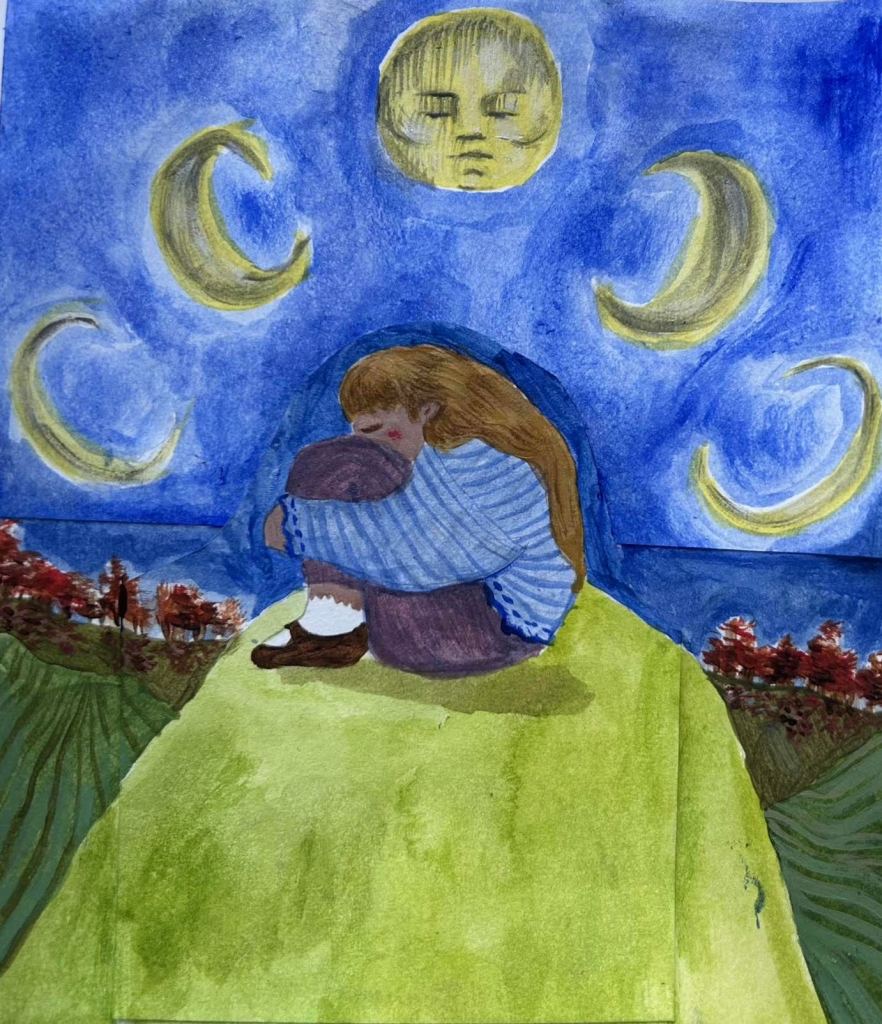
MAPPING YOUR INNER AUTUMN
Consistency in noticing and writing down what patterns emerge for you, which physical symptoms appear, which emotions and urges you feel pulled by, what tasks feel easier or more challenging, forges a closeness with your cyclicity. Meditating on the hues of your Inner Autumn, and leaning into them, brings the knowing of when to pause, rest, and set boundaries. Here we can befriend the old foe of our inner critic to help guide our decision-making, and cut out anything unnecessary causing strain. Through affirming the premenstrual phase, we realise that the voice which tells us we are ‘wrong’, ‘undesirable’ or ‘broken’ for our experience is not our own, but the patriarchy’s. Affirmation allows us to harness the reflective and clarifying power of our inner focus; telling us what we want to prioritise and plan for, how we wish to connect and communicate with partners and friends, what we hold most closely, and feel most deeply.
Book references and links 🩸
Hill, Maise. Period Power: Harness Your Hormones and Get Your Cycle Working For You. (Bloomsbury
Publishing, 2019)
Pope, Alexandra and Sjanie Hugo Wurlitzer. Wild Power. (Hay House Publishing, 2017)
https://www.redschool.net/blog/the-inner-seasons-of-the-menstrual-cycle
Isobel Ripley’s A Better World To Bleed In and Menstrual Mondays channel!
https://abetterworldtobleedin.com/
https://abetterworldtobleedin.com/the-inner-seasons/
Podcast tip! ‘28ish Days Later’ by India Rakusen
 That's What She Said Magazine