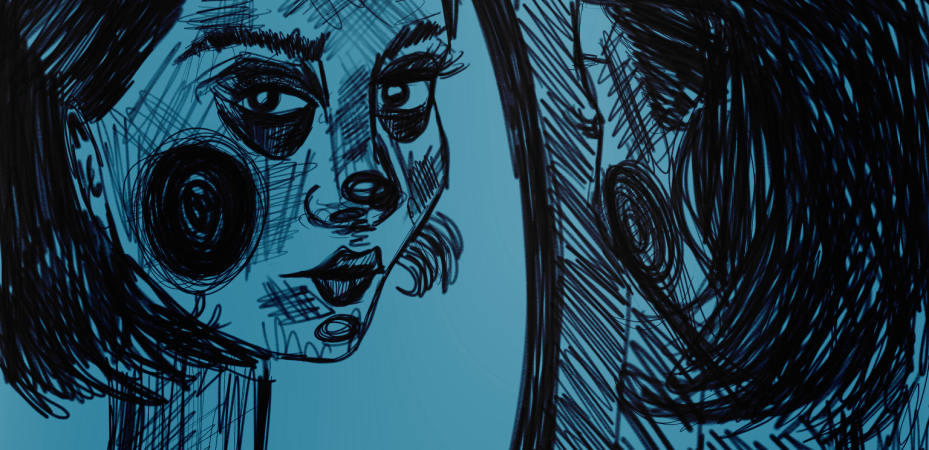
Isobel Hoyes explores the debilitating concept of self jealousy and calls for a reimagining in which our past and current selves are united in harmony and appreciation.
If you were to ask anyone, I’m sure they could tell you the first time they thought about their body and how it looked. Too big, too small, too much hair. Over time, this develops into self-jealousy. We start to compare our current bodies to the body our past selves inhabited. Social media rapidly grew more popular when I was around 13 – a social phenomenon where everyone you knew digitised themselves. A surplus of influencers everywhere you look, with ‘perfect’ bodies and ‘perfect’ faces. Focusing on the presence of social media in our lives growing up depicts its contribution to the manifestation of self-jealousy (or as psychologists have named it, self-envy), which is the feeling we have when we negatively compare our younger selves to our current selves. It stems from low self-worth and self-esteem, and then becomes an internal battle with ourselves.
The ways that we depict ourselves on the internet are the most relevant forms of self-representation in forming the inner conflict of self-jealousy. How is this harmful to our current and past selves? As social media brings about a new way to represent the self, it additionally creates a more complex type of self-jealousy. An online presence forces us to create a version of ourselves that we want to present to the entire world and, as a result, we have two different versions of self (interior and exterior). There is a significant disconnect between how we perceive ourselves in the real world and how we present ourselves on social media to others. With this growing personal disconnect the inevitable effect is a strong sense of envy within ourselves. The way we interact with social media, therefore, has created self-jealousy between our various personas.
Self-jealousy also stems from women’s tendencies to look back to our younger selves. We all share the feeling of ‘not being enough’ as a direct result of the media we consume on a regular basis. Jealous of ourselves at six years old, before this conflict even started; jealous of our thirteen year old self – she had more friends, she was more sociable. Thinking ‘what I would do to be like her again’. Instead of this toxic, damaging nostalgia of past versions of our body, we should focus on what our past self did for us. She helped me grow into who I am today; let me appreciate her instead of envying her. As your past self is taken away from you, you feel the need to grasp onto her which often develops into a sense of jealousy.
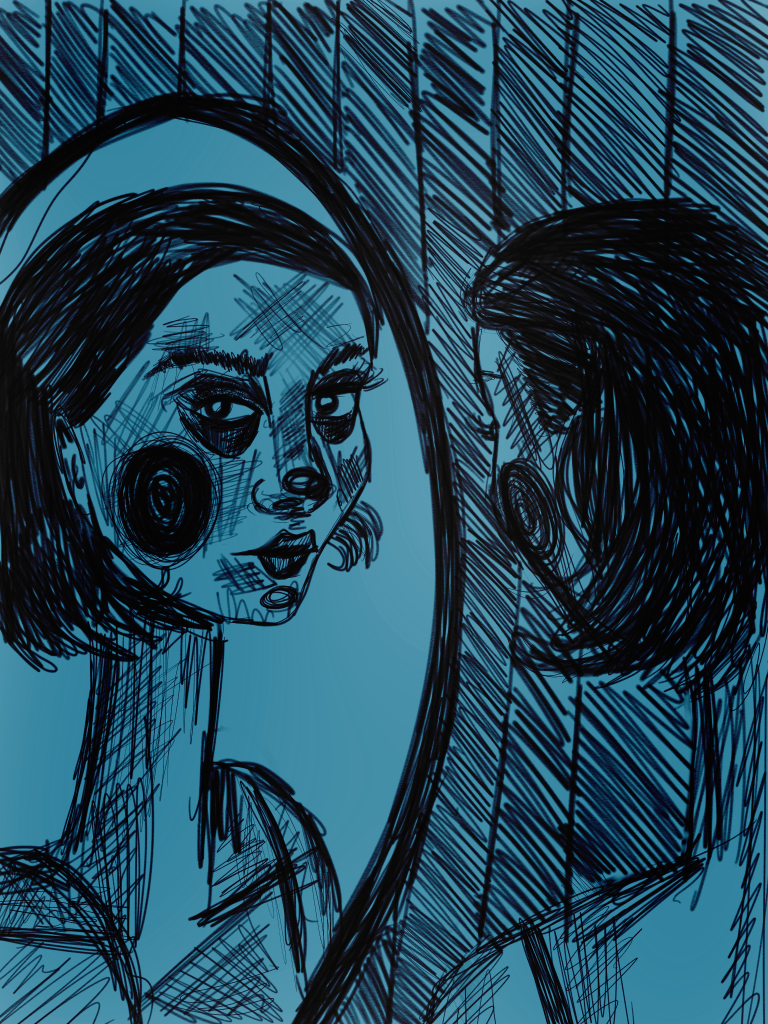
The female body is strong. It withstands trauma, it withstands loss and sadness and anger and it can withstand this internal jealousy so common in both young girls and adult women.
The harmful nature of social media will forever be a part of our lives, so there is a need for the world of women to transform this shared self-jealousy of ourselves into an appreciation for the self. Every form of yourself, younger and current, (even the one who spontaneously dyed her hair a stupid, bright colour, even the one who sometimes said ‘silly’ things, but was actually just learning about the world, even the one who spent secondary school lunchtimes eating in the toilets and avoiding everyone) has shaped the person you are today and helped you through the pain, the experiences, the exciting bits and the not so exciting bits.
‘On the day when it will be possible for woman to love not in her weakness but in her strength…on that day love will become for her a source of life’ – Simone de Beauviour. Embrace your resistant body, and your resilient soul.
Citations:
Social media posts are not a good representation of our true selves. Chrissy Sexton. https://www.earth.com/news/social-media-posts-are-not-a-good-representation-of-our-true-selves/
Authentic self-expression on social media is associated with greater subjective well-being. Erica R. Bailey. https://www.nature.com/articles/s41467-020-18539-w
 That's What She Said Magazine