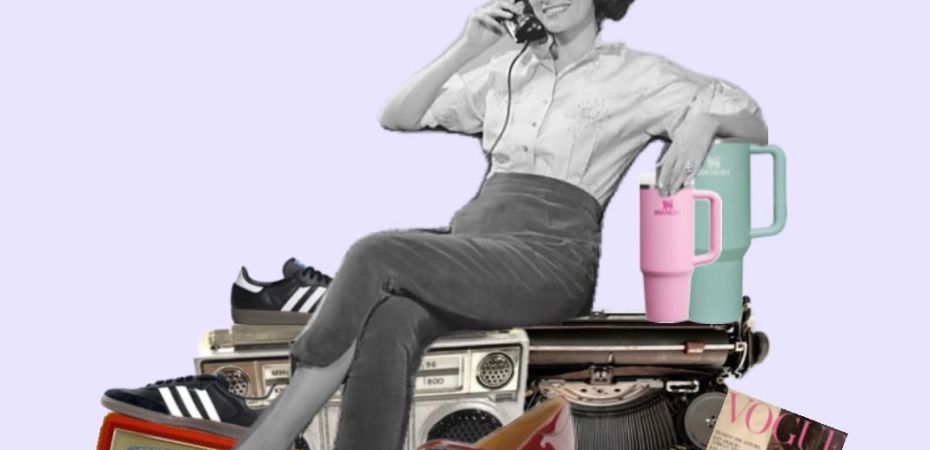
Yoyi Clark analysis the rise in consumerist based content on social media, critiquing its environmental and social impacts.
Consumerism is defined as ‘the promotion of the interests of consumers’, (Oxford Languages Dictionary) which, in today’s world, is more evident than ever. With the popularisation and accessibility of online browsing sites and personalised advertisements, the idea of constantly needing more goods in our lives is repeatedly reinforced. But, the truth is, we don’t need an updated wardrobe every couple of months, and we don’t need the never-ending Amazon kitchen ‘must-haves’. Rather, consumer capitalism needs us, continuously spending so they can reap the profits.
The rise of social media in recent years is partly responsible for the increased popularisation in consumerist culture. Apps such as Instagram and TikTok use personalised adverts and in-app browsing. This means that images of products can be viewed and purchased within a matter of minutes, without us even having to leave the app. This increased accessibility in browsing goods has allowed for products to be purchased quicker than ever. It’s no wonder that society has become obsessed with buying more on a regular basis.
The option to save card details on our accounts with brands means that customers can now whizz through checkouts with the simple click of a button, no longer requiring us to reach for our credit cards and enter the numbers. Now, your saved basket is processed in half the time it used to take! However, the positives always come with negatives.
Certainly, we’re now able to get more done in the day with the option of purchasing products from our devices within the comfort of our own homes. On the other hand, such ease means that it is harder to draw a fine line between purchasing the things that we need and those that we simply want.
As someone who enjoys staying up to date with fashion, I often struggle with deciding how much I genuinely need an item of clothing before purchasing. Some ground rules that I’ve set myself when it comes to overcoming the temptations of consumerism is to only buy an item of clothing after I have sold one – using apps such as Vinted and Depop. More importantly, I force myself to think about the versatility of the item I am wanting to buy, or if I’m trying to stay up to date with trends that will soon pass. Often, I have reminded myself that it is the latter and I don’t need this new item of clothing.
Social media influencers also play a huge role in promoting consumerist culture. On these platforms – TikTok and Instagram – influencers are paid by companies to promote products to increase product awareness and sales. Although influencers are required to label such content as advertisements, viewers often fall into the habit of buying these promoted products.
Adverts are constantly surrounding us, luring us in by offering sales and discounts to increase the chance of purchases. It’s important to remember that influencers are often not recommending these products themselves, but are promoting them in return for payment from these companies.
The rise of ‘haul’ content, a trend where influencers reveal in one video multiple items they have recently purchased or been sent, reinforces the image of increased consumption, emphasising the idea that multiple goods should be purchased in one leisurely shopping trip.
Consumerism via social media promotors is only emphasised by the fact that influencers often have large following bases – the reason that brands target these influencers – meaning that thousands of people are often viewing their content and feeding into materialism.

Social media uses further tactics such as data collection from their users to increase the chance of customer purchases. In keeping track of their users’ personal interests, the big platforms already mentioned, such as Instagram and TikTok, use your information to advertise products based on your personal interests.
For example, I mostly use Instagram to browse for fashion inspiration and to discover the new trending styles that are circling the Internet.
Therefore, the adverts surrounding my for-you-page are always from fashion brands that are pushed towards me based on the content I am viewing on the app. The purpose of this is to inspire users to purchase items from, in my case, clothing brands. At the end of the day, it’s an intelligent and effective process that I have fed into before, however recognising the subtle methods of consumerist promotion is important in discouraging overconsumption.
Social media is gradually becoming a harmful environment for several reasons, including the promotion of shopaholism. Over recent years, the term ‘retail therapy’ has become familiar to many of us. This term is associated with the experience of pleasure when purchasing new items, which is smooth running until we begin relying on such a means to uplift our mood.
Over time this fulfilment is shortened to the point where the happiness in purchasing new products decreases over time and increased purchases are made to maintain that same feeling. If you ever get to this point, I hate to admit it but, you’re a shopping addict. We need to start believing that plastic fulfilment will never get us far. It’s time to stop spending the pennies and saving up for the necessities.
A recent trend that has been circling social media is restock videos. The captions ‘restock my bathroom/ kitchen/ guestroom/ etcetera, with me’ has been seen one too many times. These videos feature individuals buying restock products, such as cleaning products, that already come in packaging, often made of plastic, only to store them in additional plastic containers to create an aesthetic organised look.
I agree that the rooms in these videos always look neat and tidily stocked after tucking the products away in plastic containers, which is the reason these videos are so frequently watched, liked, and created.
However, these restock videos subconsciously make us think how much we can buy so that we can buy even more items to store them in, resulting in a waste of money, as well as plastic promotion. Taking the approach to realising that we are being made to think that we need certain goods when we don’t, is beneficial to remember.
Ultimately, consumerism does not equal happiness, but rather a constant cycle of wanting more, resulting in overconsumption. With social media playing such a huge role in our everyday lives, it’s so easy to stumble across consumerist content. Identifying such content and dissociating ourselves from it is important in beginning to discourage consumerism for once and for all.
 That's What She Said Magazine