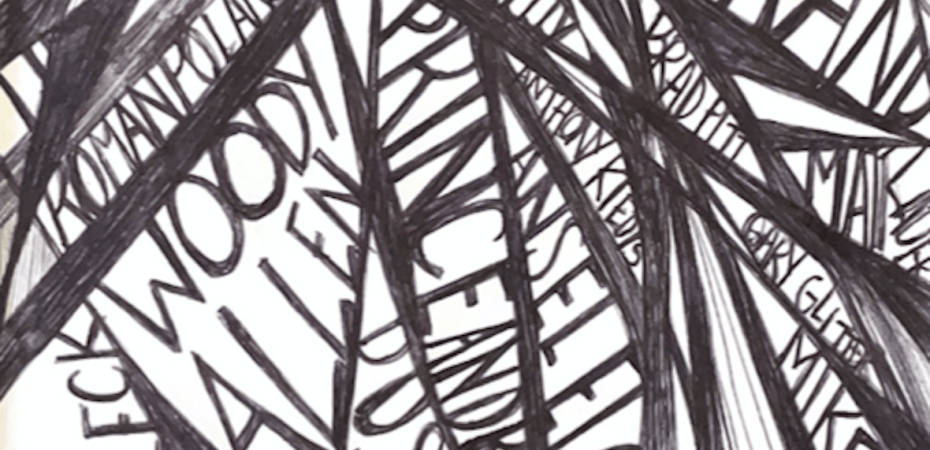
Maddie Deverell looks at examples of male celebrities accused of sexual assault, exploring how these celebrities and their fans can use their ‘nice guy’ public personas to protect themselves from accusations.
Trigger warning: Mention of sexual assault
‘I was always transparent about that. Almost too transparent.’ A declaration of innocence, a promise of total emotional honesty to his fans, an acknowledgement of wrongdoing and an appeal for support. This concoction of charm and vulnerability is a combination which Russel Brand has managed to build an entire career off, moving from blockbuster Hollywood Comedy to Sketch performances, late-night talk shows, Celebrity Bake Off, and even hosting his own wellness festival. Throughout his career he’s amassed huge popularity and a rather impressive social media following, and upon watching a couple of his interviews from the early 2010’s it’s not hard to see why. He seems personable, open to discussion, polite to all he engages with, and sincerely emotionally ethical. So, on September 19th, when seven women came forward with deeply personal and harrowing stories, accusing Russel Brand of varying degrees of sexual assault between 2006-2013, it was a stark contrast between the image of the actor we had been presented with for so long and the new one we were being informed of.
It felt eerily similar to October of 2022, when singer Rex Orange County was accused by an anonymous victim of six charges of sexual assault. Anyone familiar with the singer’s work will understand the conflict between this accusation and the image he’s crafted for himself throughout the years. A couple listens to any of his songs presents you with a man who’s emotionally invested in his own life, his friendships and relationships and, most importantly, his feelings. It’s an image that perhaps thirty years ago may have made him the target for mockery but in the modern day makes him an icon for male vulnerability and mental health representation, as well as, perhaps most notably of all, a heartthrob amongst his fans.
Whilst charm is not necessarily confined to the binaries of age and gender, there is an argument to be made that this particular persona – one of ethics, spirituality, and empathy – appeals particularly to women. It’s dazzling to be confronted with a man who so clearly understands his own complex emotions, who pines for true love and simple pleasurable occasions with his girlfriend, who campaigns for animal and human rights and, most importantly of all, who’s honest with us. Having been informed for so long by patriarchal forces that these are feminine traits, it feels like an exciting novelty to see them exercised so freely by a man. This novelty sparks affection, and the belief that if a man is willing to reject toxic patriarchal standards of how he should behave then he is, fundamentally, a ‘good guy’. It seems that the perfect male celebrity is being presented to us, and their careers thrive off the idolisation from female-dominated audiences that follow such displays of vulnerability and openness.
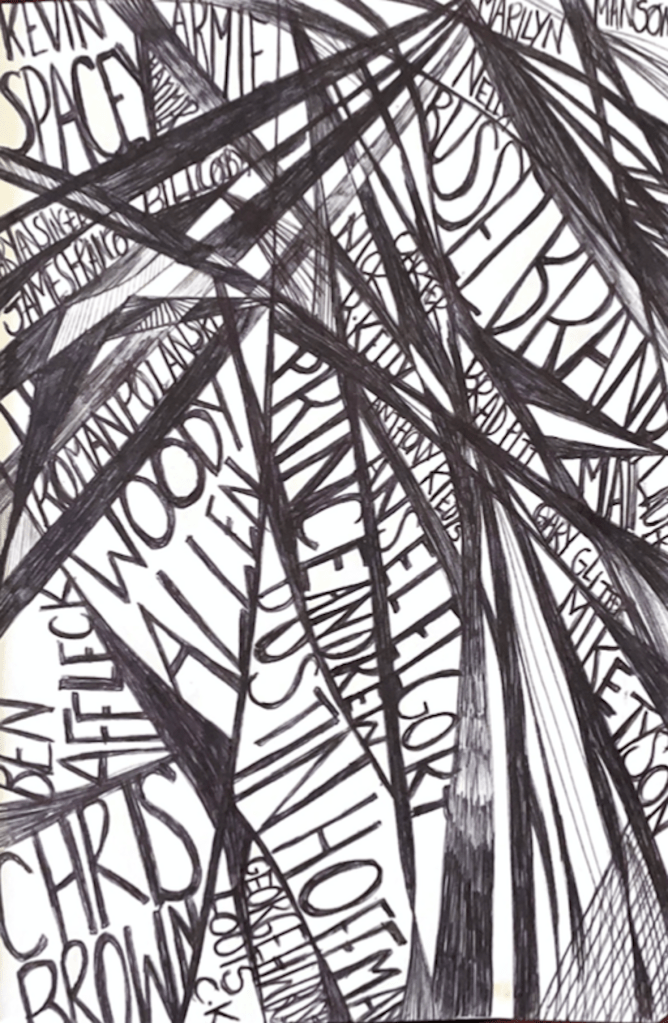
And yet this idolisation seems to come hand in hand with a dangerous presumption of innocence and the gift of trust; the belief that these kinds of men just don’t do things like that. In this case, it’s hard to ignore the media’s influence. Whilst shows like Sex Education work to subvert stereotypes, characters like Nate Jacobs from Euphoria still perpetuate the myth of the archetypal abuser. Sullen, moody, aggressive and stereotypically masculine, these men are the type of characters that we expect to be predisposed to committing violence against women. Any woman bringing charges against her abuser is likely to be accused of dishonesty, such that only 2/100 reported sexual assault cases resulted in the perpetrator being charged between July 2022 and June 2023, and when the subject of these charges doesn’t fit this image of the archetypal abuser, this disbelief is drastically increased. It is this reaction that so quickly turns into aggression and threats that lies at the heart of the issue. It will make an already difficult legal and emotional process far more agonising for the victim, and in the end, will potentially prevent women from coming forward altogether.
It is of course incredibly understandable where this idolisation can come from, and why it is so hard to let go of; it can feel like a betrayal to discover that the man who ‘rejects’ the patriarchy actually upholds it in such a nefarious way. And the solution is not to discourage men from being emotionally vulnerable, or to assume that every man who demonstrates honesty or empathy is attempting to generate disbelief towards sexual assault allegations placed against them. Rather, the focus must be on providing unconditional support to victims who speak out, and ensuring that ‘reputation’ is never capable of being a barrier to belief and justice.
 That's What She Said Magazine