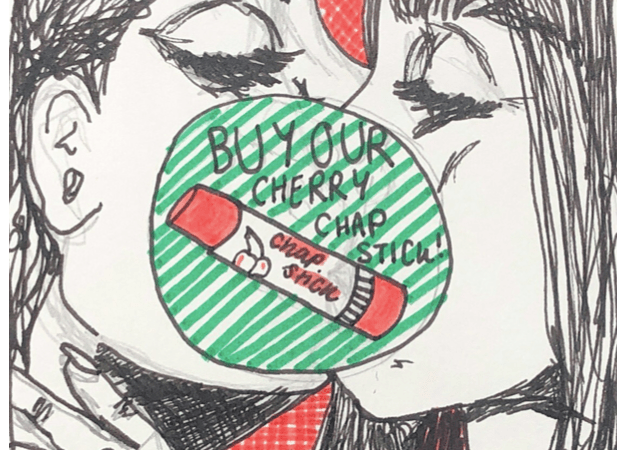
Bobbi Carsley navigates the complicated nature of queerbaiting, exploring LGBTQ+ representation in the media and the celebrity world.
Queerbaiting has long been renowned for justifiably triggering backlash from the LGBTQ+ community as we are forced to endure yet another depiction of an almost… very nearly convincing intense same-sex relationship. Defined as a marketing technique, queerbaiting involves subtle hints to queer lifestyles or romantic relationships without direct representation. Even companies have been known to target specific campaigns towards queer consumers to make their products more appealing with rainbow capitalism becoming commonplace.
The issues with queerbaiting are multifaceted, and what exactly can be categorised as queerbaiting, particularly when real people are accused? However, queerbaiting that is intentionally aware of itself as baiting continues to marginalise and disregard the existence of real queer identities.
The problem is made worse by the extreme lack of existing authentic representation of LGBTQ+ people in the media. Thus, queerbaiting seemingly adds insult to injury. It implies that queerness should only ever be visible through the fog and mirrors of vagueness and suggestion. Representation is so incredibly important in allowing people to see themselves in the media they consume, to recognise that their issues, their joys and their identities are being given the attention they are rightly owed. Being denied this results in people feeling unable to express their queerness in the way they want to, minimising this part of their identity as it is the only way they have seen it expressed – an issue further enhanced by queerbaiting.
Billie Eilish is a well-known example of a celebrity who has come into the crossfire of queerbaiting allegations. Her music video and accompanying Instagram post for her 2021 song ‘Lost Cause’ received a huge backlash online. The music video centres on Eilish at a sleepover with a group of female friends. However, the video is interspersed with shots of Eilish surrounded by the women as they caress her neck and gaze adoringly at her, leading watchers to assume that they are not just friends… but possibly more? Some fans also interpreted Eilish’s Instagram caption ‘I love girls’ as the singer, then only 19 years old, publicly coming out.
People rushed to air their opinions in the only way her mostly gen-z fanbase deemed suitable – online, with combating opinions lashed out under the trending hashtag ‘youlikegirls’. Some fans also accused Billie Eilish of queerbaiting due to her rumoured relationship with Matthew Tyler Vorce at the time. Her fans’ anger was exacerbated by Vorce’s past offensive social media posts resurfacing which contained racist and homophobic slurs. However, other fans were quick to defend Eilish’s video and instead argued the women in the music video were being unnecessarily sexualised. Disregarding queerbaiting as overly sexualising a platonic relationship encourages the dismissal of sexual attraction in authentic queer relationships. In a tale as old as time, these relationships are continually undermined because of the continuing sentiment that sexual attraction between two same-sex people isn’t as valid as heterosexual attraction.
Despite the need to highlight the dangers of queerbaiting, one resounding truth was made clear amidst the cacophony of Eilish’s controversy: the intense online pressure surrounding celebrity’s sexualities and the consequences that the accusations have on the celebrities themselves. So, what happens when people undeniably get it wrong? When that inevitable moment occurs when the vast, shapeless online mass of public opinion unnecessarily turns against someone, making demands for answers they aren’t necessarily owed?
Kit Connor came under similar fire to Billie Eilish when fans accused him of queerbaiting in late 2021. Following paparazzi photos of Connor holding hands with a female co-star, Maia Reficco, some fans then jumped to the conclusion that he was straight. Hateful messages were targeted at Connor with people saying they felt betrayed following his portrayal of bi teen Nick Nelson in the hit TV show Heartstopper. Under the intense trolling and online hate, Connor then tweeted “I’m bi. Congrats for forcing an 18-year-old to out himself. I think some of you missed the point of the show. Bye”.
Coercing a young celebrity into revealing information about their sexuality evidences the intense parasocial relationships the public force upon celebrities. The online culture of fan support makes pressure overwhelming as a seemingly never-ending stream of hate can be activated within minutes; a fanbase of thousands can appear more like an army turning on its isolated leader. Feeling as if anyone is owed details about certain aspects of an actor’s private life is completely irrational. This is never truer than with such an acutely personal experience as sexuality; expressions of sexuality should be solely down to an individual to explore and discover for themselves.
Behind the protection of an electronic screen people sometimes forget that queerbaiting accusations hold real significance. False or unsubstantiated allegations can seriously hurt people. Queerbaiting allegations become yet more complex when there is no denying that the only way to address them is to confirm or deny if you are queer. In a situation when outing someone is the worst-case scenario, whilst making someone feel uncomfortable publicly talking about their sexuality is the best-case scenario, accusations of this nature must always be thought through.
Ultimately, people are not entitled to personal detail from those who hold a public platform, and what we do see has always been filtered past an entire network of social media managers and sales teams. Does this lead us to question the right anyone has to accuse celebrities of queerbaiting? One thing remains concrete: queerbaiting hurts real people, undermining and insulting the vibrancy and joy of queerness which should be celebrated not mitigated. But incorrect, trigger-happy allegations only result in harming the members within the LGBTQ+ community which people were supposedly trying to protect.
 That's What She Said Magazine