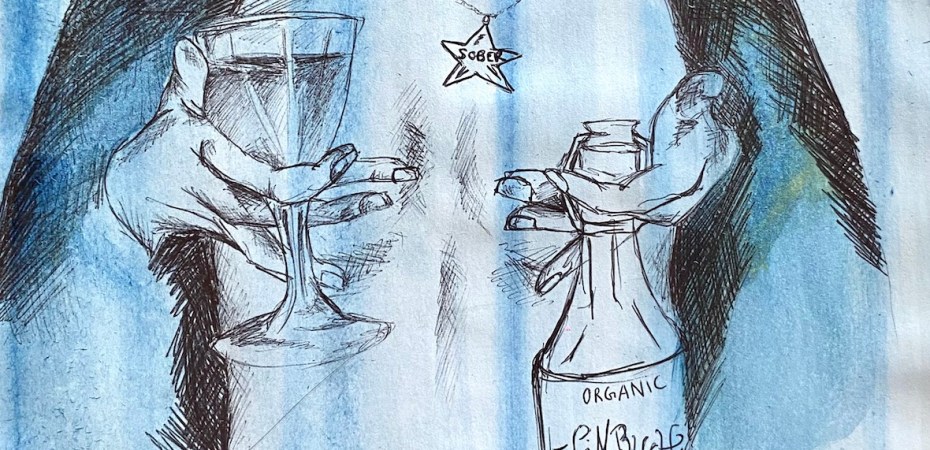
Jess Woollard delves into the many faces of sobriety. Exploring the recent ‘sober girl’ movement on social media Woollard examines its problems surrounding inclusivity, accessibility and whether its reclamation of recovery is truly for the better.
I am not a non-drinker, and scrolling through profiles like @sobergirlsociety on Instagram, I can’t claim to know first-hand what it’s like to be part of the online sober community. Social media is saturated with posts from dedicated “sober girl” accounts: recipes for alcohol-free beverages; TikToks in which young women ecstatically explain how much better their skin’s been since they quit booze; “before and after” comparison selfies, and “relatable” experiences pasted onto images of female celebrities. Skimming through the columns of elated posts under #sobergirl – in which women celebrate milestones of months without drinking, listing the ways in which their lives have improved since they’ve been abstinent – it would be remiss not to recognise each of these stories as an achievement well worth taking pride in. Yet as a recovering addict, I wonder whether some of these sober girlbosses might just be missing the mark.
My first Narcotics Anonymous meeting left me feeling like I’d infiltrated some kind of bizarre (but well-intentioned) cult. After being made to leave Bristol as my drug dependency and alcohol consumption escalated, I decided to try NA in a desperate attempt to show the University that I was serious about sobering up. I’d had little idea of what to expect from my local group, but finding myself in a circle of substance users in an underheated church, complete with the props of paper cups of tea and pamphlets with titles like “Am I an Addict?”, I recognised the TV cliché. Of the dozen or so people in the room, myself and one other woman were the only non-male attendees, and I must have been the youngest there by decades. The “shares” were largely run-throughs of the week’s latest news in relationship dramas: breakups, reunions with ex-girlfriends, and disagreements over holiday destinations included. Flicking through the papers I was given to take home, I was disconcerted by the organisation’s religious overtones, wondering how the non-believer was supposed to follow a programme in which 6 of the vital “12 Steps” refer to some kind of higher power.
Other support groups I’ve used (a few online NA sessions included) have been far less homogenous. Despite not being able to relate to all aspects of the many addicts’ stories that I’ve heard, I’ve come away from meetings feeling like I’ve learnt from people whose lives are vastly different to my own: a woman well into her pregnancy, still sober despite unthinkable stress in the face of hostility from social services; one 50-something year old man’s pouring of his newfound energy into climate activism; recurring accounts of the inability of the carceral state or our healthcare system. Without fail, I’ve been welcomed into every group I’ve entered for people in recovery, and have huge amounts of respect for those I shared space with when I was first withdrawing.
Meanwhile, the most conspicuously “girlbossified” sober social media accounts advertise ticketed dance and gym socials, mocktail “clubs”, and – in my view the most alarmingly – paid-for 1:1 phone calls with their respective Instagram profile owners, costing nearly £50 per hour and claiming to “help you navigate the ups and downs of your sobriety”. Most women posting about their relationships with alcohol are entirely un-corporate, and those seeking to monetise their own and others’ abstinence are in the minority. Nonetheless, sobriety’s social media aesthetic is becoming on the whole increasingly streamlined, leaning in to the pastel pink and depoliticised world reflected in larger profiles, and seeming to resemble more and more the “mental health influencer” and “wellness” accounts that I’ve long taken issue with for their covert endorsement of individualistic ideologies. And as sobriety becomes the latest trend in self-improvement, an inevitable few have decided to cash in.
There are obvious plus sides to this online revolution. For one thing, it’s nice to see not drinking being normalised, for anyone from the self-described alcoholic to those who just want to experiment with changing up their night-out habits. Thanks to an increase in women talking about quitting alcohol, sobriety is no longer a topic relegated to church basements, reserved for those who are willing to introduce themselves with “hi, I’m an addict” to a ring of strangers. The glaring femininity of these Instagram sober circles is part of what makes them seem approachable, safe, and – in a way that AA/NA-type settings evidently aren’t – fun. After all, being teetotal shouldn’t have to mean limiting social activity to “meetings” about how miserable it is to have a substance problem, or indeed using these resources at all.
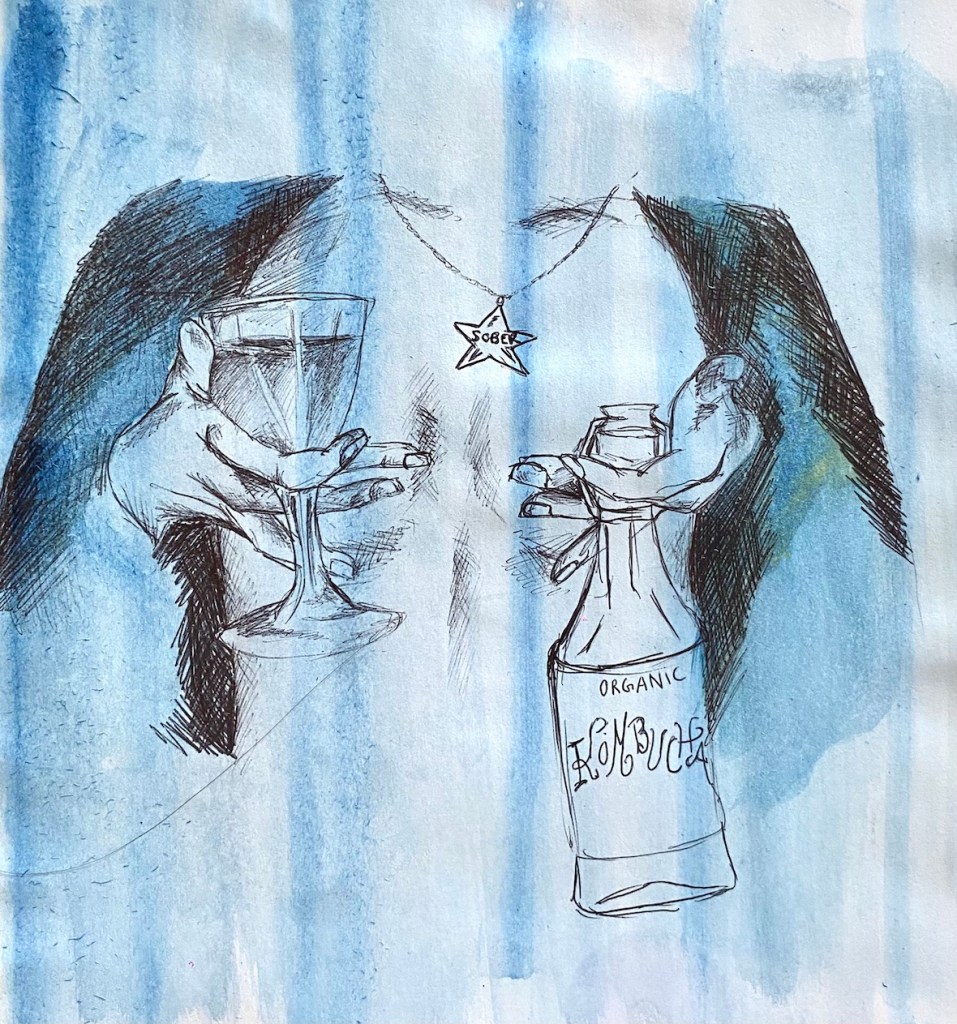
But perhaps the “Sober Sweat” sessions’ and non-alcoholic cocktail parties’ striking divergence from conventional groups has a more uncomfortable truth to it too. When “1 hour of diva sweating” (whatever that means) followed by a meditation and “45 minutes of mixing” comes for a £27.80 fee, and “The Sober Girl Society Handbook: why drinking less means living more” is £14.99 in Waterstones, it’s hard not to feel that many will be put off certain sober spaces. Instagram’s influencing girlbosses have cleaned up getting clean, namely by making their less-drink-drive all but inaccessible to those who don’t want to pay for a wholesome no-alcohol evening, and unappealing to people who aren’t feeling too glamorous in being sober. The cute graphics, quotes from sober celebrities, and group photos in which (mainly white, mainly thin) #soberbabes grin with their cans of kombucha, add up to a visual in stark contrast with the sometimes brutal, sometimes plain boring reality of recovery – as if to say, “we’re not like those addicts”, distancing sobriety as much as possible from images of the stereotyped AA-goer. Crucially, this sanitised version of sobriety has also been divorced from clearly related issues such as responses to “illegal” substance use, with harm reduction and a call for the decriminalisation of drug-related “crimes” off the radar of many internet mocktail makers.
The relentless positivity of the movement could well be a relief for individuals all too aware of why they’ve decided to drink less, as could the lack of online discourse on the often traumatic “causes” of excessive substance use. But where distraction has its place, outright diversion can be harmful. By entirely severing people’s destructive behaviours from their external environments (whether abusive relationships that might be doing further damage, or connections with loved ones that could prove hugely important) whilst singing the praises of sobriety how-to manuals and imitation prosecco, the internet’s booze-free girlbosses undermine holistic understandings of drinking behaviours, promoting the idea that alcohol-related issues can be solved by self care and inner-strength alone.
All in all, it’s great that women are feeling increasingly able to be open about their relationships with alcohol. In expressing my doubts about sobriety’s “girlbossification”, I in no way mean to minimise the accomplishments of the individuals who feel empowered by and in abstinence. Even so, I think we should be wary of any “small business” claiming to facilitate the community-building that we can all play our part in. Ultimately, the support networks that those in recovery need to stay clean don’t come as part of brand deals, nor can the skills that every addict has to learn really be practised online. Sobriety is beautiful, but to truly experience its transformative, revelatory, radical nature – we’ve got to stay connected to the worlds that we’ve come from, and the future we’re working to see.
 That's What She Said Magazine