Maddy Piesold discusses women’s role in football, exploring the history of female players and how recent cultural changes have influenced the sport.
Change is in the air, and for the Lionesses, this summer isn’t the beginning. From their historic win at the Euros to their breathtaking leap to the final of the Women’s World Cup, it’s safe to say they’re giving the boys a run for their money. But does anyone care?
The debate surrounding professional women’s football has long been shrouded in questions of pay gaps, revenue and technical ability. The world cannot discuss them without referring to men in the same breath, but I suppose that’s the case for a lot of things. As for women’s football, will this always be an issue?
During an interview back in 2015, Emma Hayes, Chelsea FC’s manager of the women’s team, was asked if “women can ever achieve equality with men”. Hayes’ response: why can’t we “appreciate [women’s football] in its own right?”
So why can’t we? Records suggest that women have been playing football since the late 18th century, a time when female players were subjected to criticisms of their clothing, bodies or “unladylike” conduct. Sexist discomfort over women on the field was so strong it actually culminated in the FA banning women from football entirely in 1921. This came just when women’s football was becoming popular enough amongst the public it was nearly considered “normal”, can you imagine! Just a year prior Kerr Ladies team, the Dick, won 4-0 in a Boxing day match that raised funds for wounded WW1 soldiers and sold out the stadium with 59,000 fans. Ultimately, the ban was a knee-jerk reaction to the shock and discomfort felt when women were succeeding in a space predominantly enjoyed by men. Today, it seems this threat may hold true.
Women’s football only went professional in 2018. One year before this, Lewes FC became the first team to grant men and women’s teams equal pay. On the whole, women still earn a fraction of their male counterparts, but as the popularity of women’s football grows alongside media coverage and commercial sponsorships, wages are increasing for women in the Super League. The future is hopeful, but there’s still a long way to go and greater revenues are essential for them to have any hope of being on par with the wealth and prestige of men’s teams. A common defence for the disparity between the genders in professional football is that women’s teams simply don’t bring in the same numbers. It is also conveniently forgotten the system with which women are battling against: biassed press, sexist rhetoric on social media and a fundamental belief that women don’t deserve to succeed professionally in sports, because they aren’t as good at it.
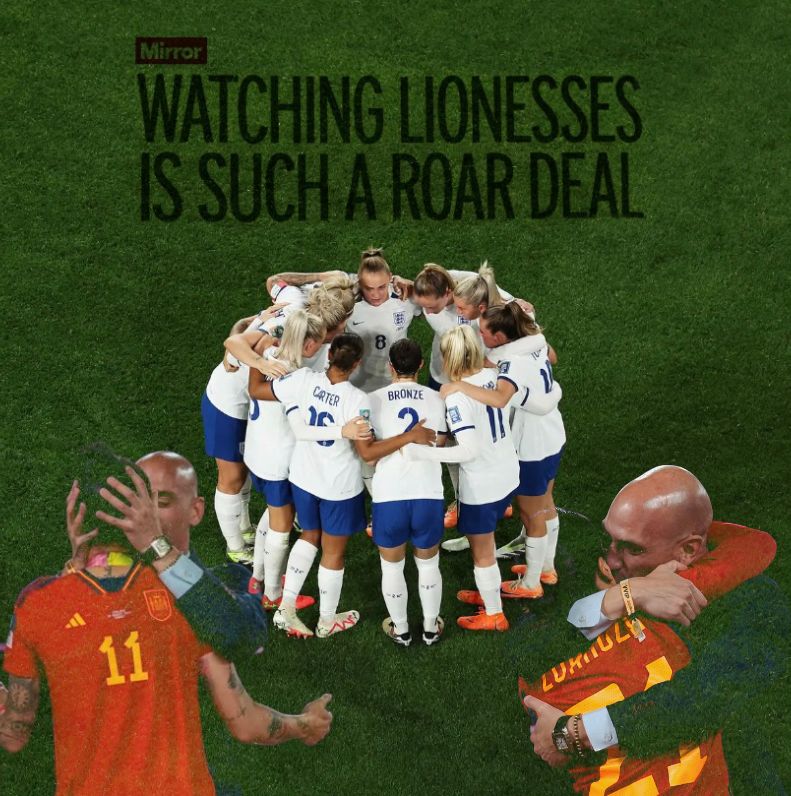
Taking a practical look at things, gaining popularity is the only way to raise commercial revenue and sustain sufficient investment in women’s football teams, ensuring their future success. The financial side of professional football is very cyclical when it comes to popularity and funding, and most certainly isn’t a career of equal opportunity. Despite improved media coverage of the Women’s Super League, clubs simply aren’t attracting enough attention to gain the same endorsements or investments as those in the Premier League. Then there’s the hard fact that even when attention is gained, it isn’t always positive. When president of the Spanish Football Federation, Luis Rubiales, kissed Jenni Hermoso during the World Cup awards ceremony without her consent, it confirmed a very ugly side of football culture the world only now seems to be waking up to. It begs the question, is inherent prejudice to blame for the lack of respect afforded to women in football? If it is truly misogynistic at its core, where does this come from?
You don’t need to know much about football to know that its fanbase is dominated by men. It comes as no surprise that not all of these men are interested in a world where women play football. A study conducted by Durham University found that “two-thirds of male football fans harbour hostile, sexist or misogynistic attitudes towards women’s sport”. This startling statistic uncovers a sad reality, essentially that many men think women shouldn’t be playing sport full stop, let alone being paid to do so. Most interestingly, these findings were irrespective of age and actually cut across generational groups. For the 68% that openly polled their disagreement with women’s participation in football in particular, a feeling was also expressed that women are more suited to “feminine” sports such as athletics.
The anti-feminist backlash over women’s football has existed for years, but given social progression in so many other areas, its continued relevance is worrying. What is so unsettling and/or threatening about women engaging in a typically “masculine” sport and even being, I don’t know, good at it? Well, for those that oppose women playing team sports, it’s typically rooted in a belief that any sport involving physical contact or “rough” play is best left as a masculine endeavour. Leave the running, the tackling, the kicking to the men. Given the distances feminism has come, it may shock you that these opinions are still felt. The solution? It’s impossible to know, but one thing to learn is that sporting associations everywhere must work harder to eliminate sexism from the root because it most certainly still operates.
It’s an uphill battle, but sex, gender and inequalities aside, we may be at a crucial juncture in sporting history. Women’s football is making a spectacular display of strength against old, toxic gender stereotypes and cultures of misogyny. So I urge you, the next time you’re at the pub cheering on your favourite team, raise a pint for the ladies.
 That's What She Said Magazine